
Hair Tonic for Thinning Hair: Routine Guide

There’s a particular moment most people with thinning hair can tell you about. Maybe it was a photo taken from above at a wedding. Maybe it was the bathroom light at a hotel, which seems to be designed by someone with a grudge against scalps. Or maybe it was just a few too many hairs in the plughole, three mornings in a row.
Whatever the moment, what usually follows is a late-night search, a lot of conflicting advice and a basket full of products that promise the earth. This guide is here to slow all that down a bit. We’ll look at what thinning hair actually is, where a hair tonic genuinely fits, how to choose one, and how to build a simple daily routine you can stick to for long enough to judge it properly.
The short answer: a hair tonic for thinning hair is a leave-in liquid you massage into your scalp once or twice a day. It’s designed to care for the scalp where hair grows, and it works best as part of a steady routine with a gentle shampoo, good everyday habits and at least three months of patience. It isn’t a medicine, so if your hair loss is sudden, patchy or worrying you, see your GP first.
First things first: what does thinning hair actually look like?
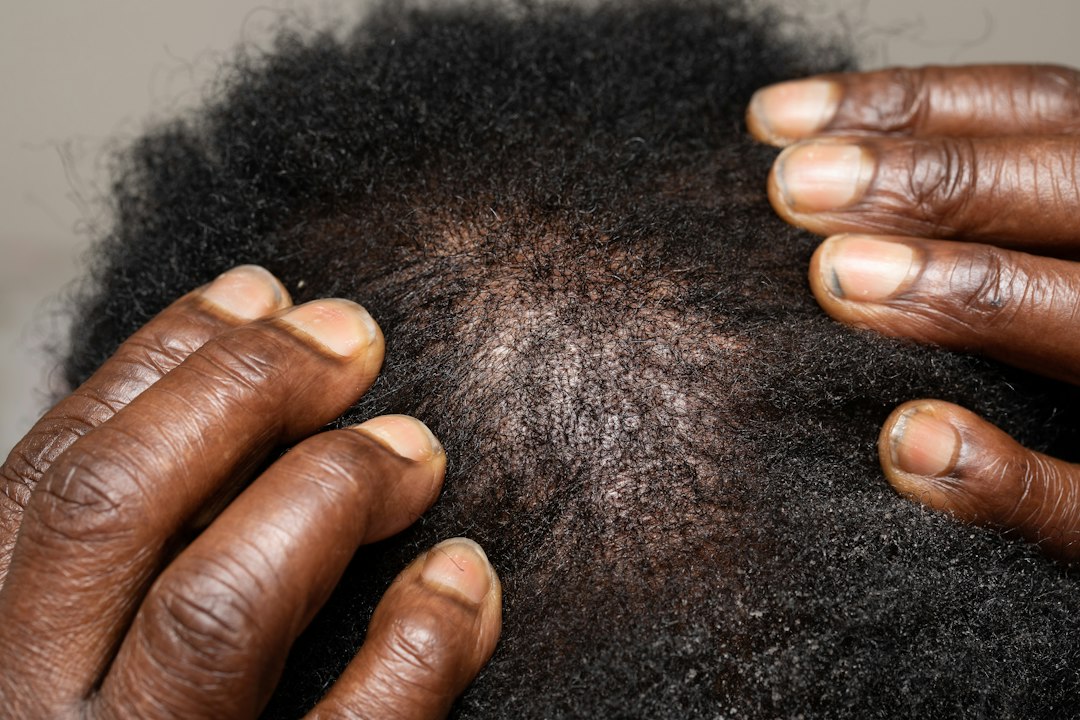
Thinning hair isn’t one thing. It shows up differently depending on who you are and what’s behind it, and knowing which pattern you’re looking at makes it much easier to choose the right approach.
- A widening parting. Very common in women. The parting looks broader than it used to, especially under bright light.
- Less volume overall. Your ponytail feels thinner, or your hair just doesn’t hold its shape the way it did.
- Thinning at the crown. Often the first sign for men, and the one you only notice in photos or shop changing-room mirrors.
- A receding hairline. The classic “M” shape at the temples in men, and sometimes a thinner hairline in women who wear tight styles.
- More shedding than usual. More hair in the brush, the shower or on your pillow, sometimes in quite alarming handfuls.
- Patches. Smooth, round bald patches are a different story altogether and need a GP, not a tonic.
Losing somewhere between 50 and 100 hairs a day is completely normal, by the way. Those are hairs that have finished their growing cycle. It’s when you’re noticeably losing more than that, or seeing the patterns above, that it’s worth paying attention.
Why hair thins in the first place
Before you buy anything, it helps to have a rough idea of what’s going on. Hair thins for lots of reasons, and some of them need sorting out at the source rather than on the scalp.
Hereditary thinning
The most common cause by far, in both men and women. It’s passed down through families and tends to come on gradually. In men it usually starts at the temples or crown. In women it tends to show as a wider parting and general thinning on top, with the hairline staying put. The follicles slowly produce finer, shorter hairs over time.
Shedding after a shock to the system
A stressful event, an illness, an operation, having a baby or a crash diet can push lots of hairs into their resting phase at once. A couple of months later, they all fall out together, which is understandably frightening. This is called telogen effluvium, and the good news is that it’s usually temporary. We’ve written a whole guide to telogen effluvium and sudden shedding if this sounds familiar.
Low iron and other nutritional gaps
Hair is a bit of a luxury as far as your body is concerned. When supplies run low, it’s one of the first things to be rationed. Low iron is a common culprit, especially for women, along with low vitamin D, B12 and not enough protein. Our guide to vitamin deficiencies and hair loss covers the main ones.
Hormones and health conditions
Thyroid problems, polycystic ovary syndrome, the menopause and some medicines can all affect hair. These are things a GP can test for, and treating the underlying cause often makes the biggest difference.
Tension and styling
Tight ponytails, braids, weaves and extensions pull on the roots day after day. Over time that can cause traction hair loss, usually around the hairline and temples. The fix is simple in theory (loosen up) and annoyingly hard in practice if you love your sleek ponytail.
If you’re not sure which of these applies to you, start with our guide to why your hair might be falling out. And if anything feels sudden, patchy or comes with other symptoms, book in with your GP. The NHS guide to hair loss is a good, calm place to start reading.
So where does a hair tonic fit?
Here’s the honest version, because you’ll hear plenty of the other kind elsewhere.
A hair tonic is a scalp care product. It’s a light liquid that you massage into your scalp and leave there, so whatever’s in it stays where hair actually grows instead of being rinsed down the drain like shampoo. Its job is to look after the scalp, keep it comfortable and support the conditions your follicles work in.
What a tonic isn’t is a medicine. It won’t change your genes, it can’t cure a medical condition, and it can’t undo a thyroid problem or an iron deficiency. The only topical treatment licensed in the UK for hereditary hair loss is minoxidil, which you can buy from pharmacies and is worth discussing with a pharmacist if hereditary thinning is your main worry.
So why bother with a tonic at all? Because for a lot of people, scalp care is the missing piece. A tonic gives you a daily habit that looks after the skin your hair grows from, it pairs well with everything else you’re doing, and herbal tonics in particular come from a long tradition of scalp care in Chinese medicine. For people who’ve noticed more shedding and want a gentle, consistent routine, it’s a sensible place to start.
If you’d like the bigger picture on tonics in general, including how they differ from serums and oils, our guide to hair growth tonics and serum types covers it in detail.
Choosing a hair tonic for thinning hair
Hair tonics vary wildly, from barbershop-style tonics that are mostly about slicking hair down to concentrated herbal scalp formulas. If thinning is your concern, here’s what we’d look for.
It’s made for the scalp
Check the directions. A tonic for thinning hair should go on the scalp, not the lengths. If the bottle tells you to comb it through your ends for shine, it’s a styling product.
It’s leave-in
Rinse-off products have a minute or two on your scalp at most. A leave-in tonic stays put, which is the whole point.
The ingredients actually match the job
Turn the bottle round and read the list. In a herbal tonic, you want the botanicals reasonably high up, not hiding after the perfume. Common ones in Chinese herbal tonics include ginseng, dang gui (Chinese angelica root), white peony root, Sophora root and ginger. Western tonics often lean on rosemary, nettle and caffeine.
The texture suits your life
Thinning hair is often fine hair, and fine hair hates anything heavy. A light, quick-absorbing tonic won’t weigh your roots down or leave your scalp greasy. Most herbal tonics are alcohol based for exactly this reason, though very dry or sensitive scalps may find that a bit much.
The claims are realistic
If a bottle promises to “regrow a full head of hair in 30 days”, put it back. Cosmetic products in the UK aren’t allowed to claim they treat medical conditions. A brand that talks honestly about scalp care and gives you realistic timescales is a brand that’s playing it straight.
It fits your budget for at least three months
This one gets overlooked. A tonic you can afford to use for three months is far more useful than a fancy one you abandon after three weeks because the bottle cost a fortune.
Our tonic for thinning hair
Our Hair Loss Prevention Scalp Tonic is the one in our range made specifically for thinning hair and extra shedding. It’s the most concentrated formula we make, with 15 traditional Chinese herbs including dang gui, white peony root, Sophora root, ginseng, drynaria and saposhnikovia, in a light alcohol and water base.
It’s a leave-in tonic that absorbs quickly, and most people describe it as cooling and refreshing on the scalp. The label directions are 10ml massaged into the scalp twice a day, morning and evening, with no rinsing. It’s for men and women.
It sits alongside our warming Hair Growth Tonic, which focuses on feeding the follicles, and the Scalp Cleanser for clearing build-up. Lots of people use the Prevention Tonic on its own. Some use it with the others as a fuller routine.
A daily routine for thinning hair
This is where most people go wrong. Not with the product, but with the routine around it. Here’s a simple one that’s realistic for a normal, busy week.
Every morning
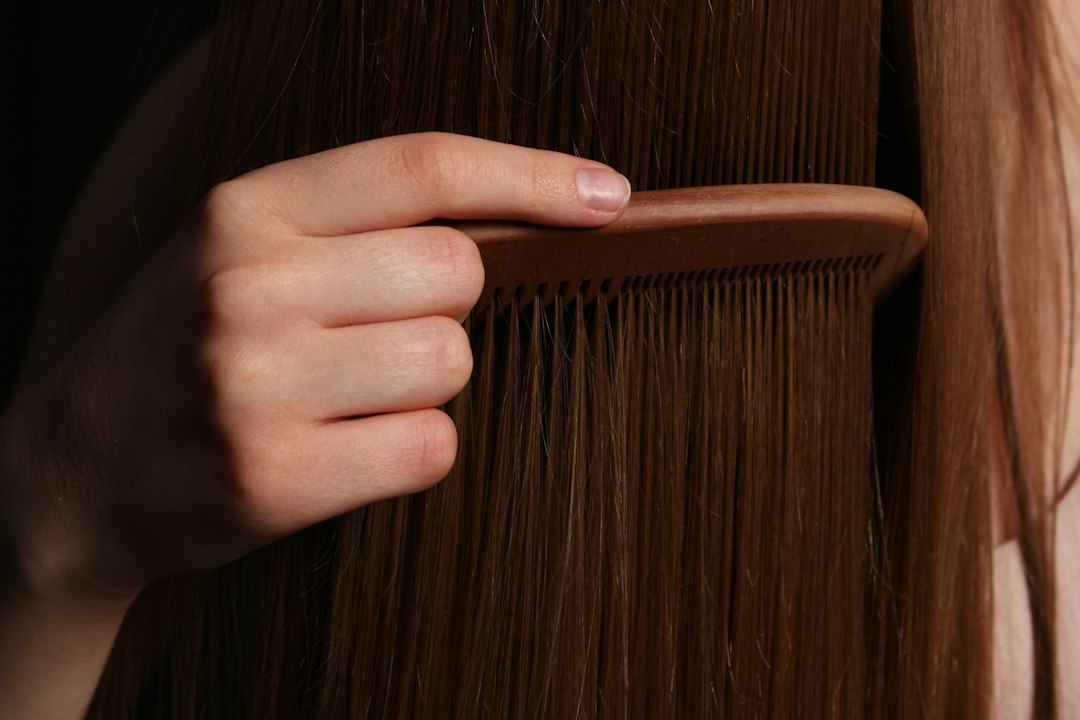
- Brush gently. Use a wide-toothed comb or soft brush, starting at the ends and working up. No dragging.
- Apply your tonic. Part your hair, apply the tonic along the parting, move a centimetre or two across and repeat. Focus on the areas that bother you most, but cover the whole scalp.
- Massage for a minute. Fingertips, small circles, gentle pressure. This helps the tonic absorb, and it’s a nice way to wake up.
- Let it dry before styling. Give it a few minutes before reaching for the hairdryer or any products.
Every evening
- Apply your tonic again, the same way.
- Loosen up. If you’ve had your hair up all day, take it down. Sleep with it loose or in a soft plait or scrunchie.
- Think about your pillowcase. A smooth pillowcase causes less friction than rough cotton. It’s not essential, but it’s a nice touch if you’re losing sleep (literally) over breakage.
Two or three times a week
- Wash with a gentle shampoo. Massage it into the scalp, not the ends. Our guide to herbal shampoo explains what to look for.
- Condition the lengths only. Keep conditioner away from the roots, where it can make fine hair look flat and thin.
- Towel-dry, then tonic. Pat, don’t rub. Then apply your tonic to the damp scalp.
Every month
- Take a progress photo. Same spot, same light, same angle. Crown, parting and hairline. This is your best friend, because the mirror lies and your memory lies even more.
- Check your basics. Are you eating enough protein? Sleeping? Wearing your hair tighter than you meant to? Hair is a good mirror for the rest of your life.
Hair tonic for women with thinning hair
Women’s thinning tends to be more diffuse than men’s: a wider parting, less volume and a ponytail that feels a bit sad. It’s also hugely common and talked about far less than it should be.
A few tips if this is you:
- Get your bloods checked. Iron, thyroid and vitamin D are all worth asking your GP about, especially if you have heavy periods, have recently had a baby or have been dieting.
- Use the sectioning method. Longer hair makes it easy for tonic to soak into the hair rather than reaching the scalp. Part, apply, move, repeat.
- Be kind to your hairline. Swap tight ponytails and buns for looser styles, and give extensions a break if you wear them.
- Watch the heat. Straighteners and hot blow-dries won’t cause thinning on their own, but they make fragile hair break more easily, which makes thinning look worse.
Postpartum shedding deserves a special mention. Lots of women lose a startling amount of hair a few months after giving birth. It’s usually temporary and settles within a year, but a gentle routine helps you feel like you’re doing something, and that matters too.
Hair tonic for men with thinning hair
For men, the usual story is hereditary thinning at the temples or crown, often starting in the twenties or thirties. It’s extremely common and, for some, a real knock to confidence.
- Start early. Scalp care habits are easier to build before thinning is obvious than after.
- Talk to a pharmacist about licensed options if hereditary thinning is your main concern. A tonic can be part of your scalp care alongside that conversation.
- Apply to the crown and temples, then massage in. Short hair makes this very quick, so there’s no excuse for skipping it.
- Let it dry before wax or clay. Product on top of damp tonic is a sticky combination.
- Consider a shorter cut. Barbers will tell you that shorter styles often make thinning far less noticeable than trying to grow it longer to cover it.
Famous faces who’ve been there
If thinning hair is getting you down, you’re in very good company. Some of the most famous people in Britain have dealt with it publicly, in very different ways.
Gail Porter, the Scottish TV presenter, developed alopecia in 2005 and lost her hair within weeks. Rather than hide it under hats or wigs, she went out in public as she was. She’s spoken openly about how hard it was, and she did an enormous amount to make hair loss less of a taboo for women in the UK. Her kind of alopecia is an autoimmune condition rather than everyday thinning, and it’s a good reminder that sudden or patchy loss always deserves a proper medical opinion.
Jason Statham went the other way. The former British diving squad member’s hair was clearly thinning in his early acting days, so he simply shaved it off and carried on. His take on the whole thing was refreshingly blunt: you get what you’re given. It worked out rather well for him. Not everyone wants to go the Statham route, of course, but he’s living proof that thinning hair doesn’t have to define you.
And then there’s everyone in between: the people who quietly use a tonic every morning, change their haircut, sort out their iron levels and get on with their lives. That’s most of us, really.
How long before you notice a difference?
We’ll be straight with you: longer than you’d like.
Hair grows about a centimetre a month, and every hair on your head is on its own long cycle of growing, resting and shedding. Any change to your routine takes months to show up in the mirror. Our guide to understanding the hair growth cycle explains why in more detail.
Roughly what to expect:
- The first month: getting used to the routine. Your scalp may feel fresher and cleaner. Don’t expect to see anything else.
- Months two to three: some people notice less hair in the brush or shower. Keep going, and keep taking your photos.
- Month three onwards: the point to take honest stock. Compare your photos side by side.
Results vary a lot from person to person, and they depend heavily on what’s causing your thinning in the first place. If you’ve given a routine a fair go and you’re still worried, that’s a good moment to see your GP or a trichologist.
And once you’re happy with how your hair looks, you don’t have to keep going at full pelt forever. Many people drop down to a maintenance routine of once or twice a week.
Common mistakes with thinning hair
Hiding it with tighter styles
Scraping hair back to hide a thin patch often makes things worse over time. Looser styles and a good haircut usually look better anyway.
Washing less to “save” your hair
Washing doesn’t make hair fall out. Those hairs were already on their way out. A clean scalp is a happier scalp, so wash as often as your scalp needs.
Buying five products at once
If you start a shampoo, two tonics, a supplement and a new diet in the same week, you’ll never know what’s working or what’s irritating your scalp. Introduce one thing at a time.
Giving up at week four
Understandable, but too early. Three months is the minimum for a fair trial of anything.
Ignoring the cause
No tonic can fix low iron or a thyroid problem. If something’s off inside, sort that first.
Not seeing a doctor when you should
Sudden loss, patches, a burning or painful scalp, or hair loss with other symptoms like tiredness or weight changes all need a GP, not a new bottle.
Frequently asked questions about hair tonic for thinning hair
Does hair tonic work for thinning hair?
A hair tonic is a scalp care product, not a medicine. It helps look after the scalp where hair grows, and works best as part of a consistent routine with a gentle shampoo and good everyday habits. Results vary, and it needs at least three months of regular use before you judge it.
How do I use a hair tonic for thinning hair?
Apply it to a clean, dry or towel-dried scalp. Part your hair in sections, apply the tonic along each parting, massage it in with your fingertips for a minute and leave it in. Our Hair Loss Prevention Scalp Tonic label directs 10ml twice daily.
Is hair tonic good for women’s thinning hair?
Yes, most hair tonics, including ours, are suitable for women and men. Women with thinning hair should also ask their GP about checking iron, thyroid and vitamin D levels, as these are common causes.
Can I use hair tonic every day?
Yes. Most hair tonics for thinning hair are designed for daily use, usually once or twice a day. Follow the directions on your product.
Should I use hair tonic before or after shampoo?
After. Wash your hair, towel-dry it, then apply the tonic to your scalp so it stays on until your next wash.
Will hair tonic make my hair greasy?
A good scalp tonic shouldn’t. Most are light and alcohol based, so they absorb and dry quickly. If yours leaves your roots greasy, you may be using too much or applying it to your hair rather than your scalp.
When should I see a doctor about thinning hair?
See your GP if your hair loss is sudden, comes out in patches or clumps, affects other parts of your body, or comes with other symptoms such as an itchy or painful scalp, tiredness or weight changes. Some causes are very treatable once they’re found.
Can I stop using hair tonic once my hair improves?
You can reduce it. Many people move to a maintenance routine of once or twice a week once they’re happy with how their hair looks.
The bottom line
Thinning hair is common, it’s rarely anyone’s fault, and it’s very rarely hopeless. Work out what’s likely behind it, sort out anything that needs a doctor, and then build a simple routine you can actually keep up: a gentle shampoo, a leave-in hair tonic on the scalp every day, looser styles and a monthly photo.
It’s not glamorous, and it’s not quick. But consistent scalp care, done properly for a few months, is one of the most sensible things you can do for thinning hair. And if all else fails, there’s always the Statham option.
Have a look at our Hair Loss Prevention Scalp Tonic or browse the full herbal scalp care range to build your routine.
This guide is for general information and isn’t medical advice. If you’re worried about sudden, patchy or heavy hair loss, please speak to your GP or pharmacist.