
How Much Hair Loss in the Shower Is Normal?

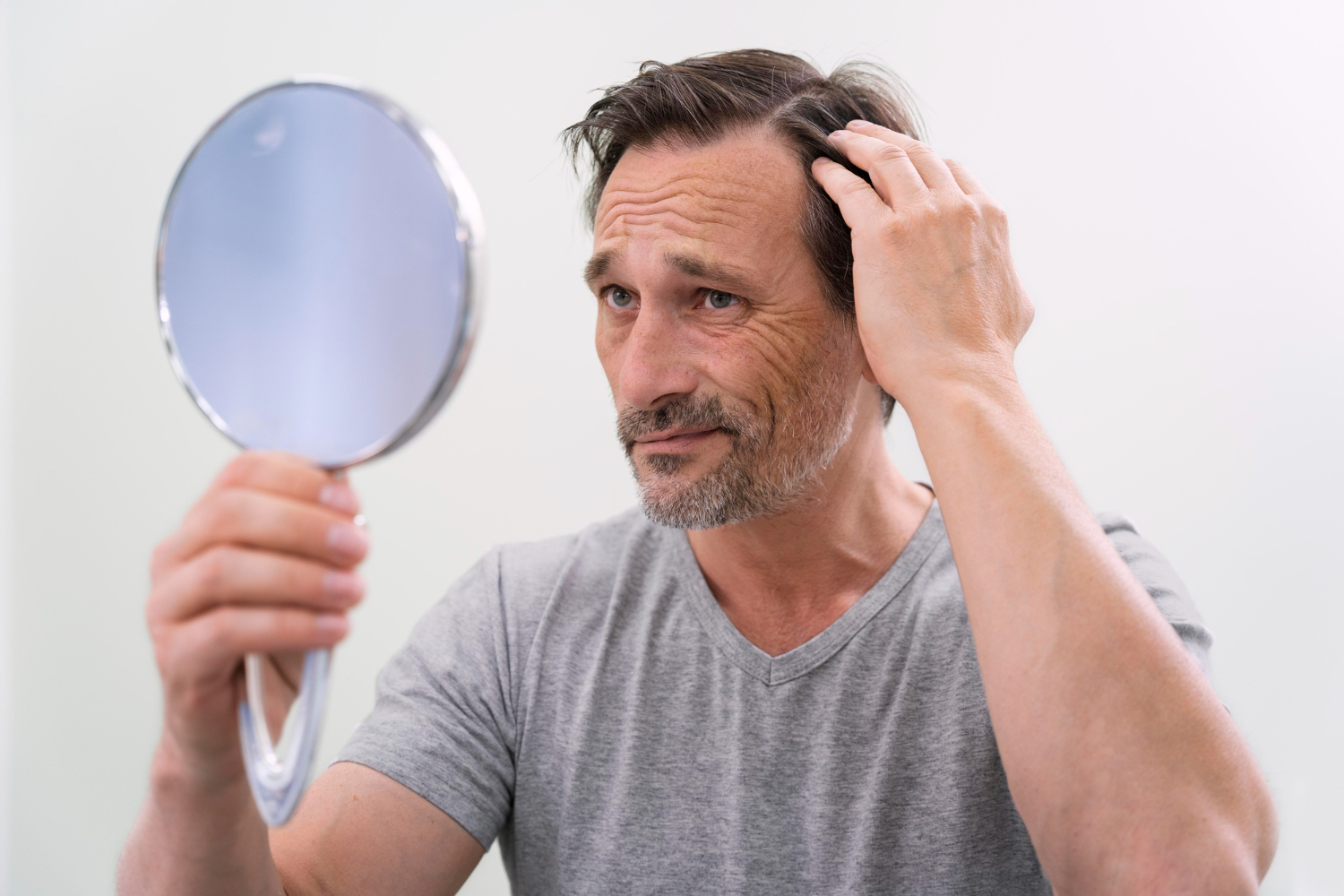
How much hair loss in the shower is normal? According to the NHS, losing around 50 to 100 hairs per day is a normal part of the hair growth cycle. You may notice many of these strands when washing your hair because shampooing, rinsing and detangling bring together hairs that are already ready to shed.
Seeing hair in your shower drain does not automatically mean you are experiencing abnormal hair loss. The amount you notice can depend on your hair length, texture, washing frequency and natural shedding pattern.
However, a sudden or persistent increase in shedding, visible thinning or distinct bald patches may be worth discussing with your GP.
How Much Hair Should You Normally Lose in the Shower?
There is no single number of hairs that everyone should expect to lose during a shower.
The NHS explains that losing 50 to 100 hairs each day is normal. This is a daily estimate rather than a specific allowance for every hair wash.
Some of those hairs fall out naturally throughout the day. Others become visible when you brush, shampoo or rinse your hair.
Dermatologist Dr Wilma Bergfeld, writing in a Cleveland Clinic article about shower shedding, explains that washing can dislodge strands already in the resting or shedding stage of the hair growth cycle.
This is why your shower drain may collect noticeably more hair than your pillow or hairbrush.
The key is not to count every strand. It is to understand what is normal for you and notice significant changes over time.
Why Does So Much Hair Fall Out When Washing?
If you have ever looked down at your hands while shampooing and noticed several strands between your fingers, you may have wondered whether washing is responsible.
In most cases, the washing process simply makes naturally shed hair easier to see.
There are several reasons for this.
-
Loose Hair Collects During Washing
Throughout the day, individual strands reach the end of their growth cycle and are shed naturally.
Some fall away unnoticed, while others remain temporarily caught among neighbouring hairs.
When you massage your scalp, apply shampoo or rinse your hair, those loose strands can become dislodged.
As a result, hair that might otherwise have fallen out gradually becomes visible in one place.
-
Washing Frequency Affects What You Notice
Someone who washes their hair every day may see fewer loose strands during each shower than someone who washes twice a week.
This does not necessarily mean the person washing less frequently is losing more hair overall.
Hairs that have already shed can accumulate between washes, particularly in curly or tightly textured hair.
For advice on creating an appropriate routine, read our guide on how often you should wash your hair.
-
Hair Length Makes Shedding Look More Noticeable
Long hair can make normal shedding appear more dramatic.
A collection of long strands may look considerably larger than the same number of short hairs.
Hair density and texture also affect how much shed hair becomes visible during brushing and washing.
This is one reason why judging hair loss by the size of a clump alone can be misleading.
-
The Natural Hair Growth Cycle Continues
Hair follicles move through different stages of growth, transition, rest and shedding.
These stages include:
- Anagen: The active growth phase.
- Catagen: A short transitional phase.
- Telogen: A resting phase.
- Exogen: The process through which a hair strand is released.
Individual follicles do not all follow exactly the same schedule.
Consequently, normal shedding can occur every day without causing noticeable changes in overall hair density.
Is It Normal to Lose More Hair on Wash Day?
Yes. It is common to notice more hair on wash day, especially if you have not washed or detangled your hair for several days.
Consider two different routines.
| Haircare routine | What you might notice |
| Washing daily | Loose strands may be removed in smaller amounts during each wash |
| Washing every two or three days | More previously shed strands may become visible together |
| Washing long or thick hair | The collected hair may appear more substantial |
| Washing curly or tightly textured hair | Shed strands may remain caught in the hair until detangling |
These are general patterns, not fixed rules.
A larger collection of hair after several days without washing does not automatically indicate excessive shedding.
Rather than comparing your shower drain with someone else’s, pay attention to your usual pattern.
Does Washing Your Hair Cause Hair Loss?
Normal hair washing is not an established cause of permanent hair loss.
Shampooing primarily cleanses the scalp and hair, removing everyday oil, sweat and product residue.
The act of washing can release strands that are already ready to shed, but this does not mean that shampooing has caused those hairs to enter the shedding phase.
However, rough washing, forceful detangling and excessive heat can damage the hair shaft.
The American Academy of Dermatology recommends applying shampoo primarily to the scalp, using conditioner appropriately and handling wet hair carefully.
Following a gentle routine can help limit avoidable hair breakage.
Does Washing Hair Every Day Increase Shedding?
Washing your hair daily does not necessarily increase the rate at which hair naturally sheds.
However, it may make shedding more noticeable because loose strands are collected more frequently.
The appropriate washing frequency depends on your scalp and hair type.
For example, someone with a naturally oily scalp may prefer frequent cleansing, while someone with dry, curly or textured hair may choose a less frequent routine.
Choose a schedule that keeps your scalp comfortable without unnecessarily drying or damaging your hair.
Hair Shedding vs Hair Breakage: What’s the Difference?
Not every strand of hair found in the shower represents hair shedding from the follicle.
Some strands may have snapped along their length.
Understanding this distinction can help explain what you see after washing.
| Normal hair shedding | Hair breakage |
| A strand is released from the follicle | A strand snaps along its length |
| Often involves a full-length hair | May leave shorter or uneven strands |
| Forms part of the natural hair cycle | Can be associated with physical or chemical damage |
| Occurs even with a gentle haircare routine | May be aggravated by rough handling, heat or friction |
| Does not necessarily mean hair density is decreasing | Can affect how full and smooth the hair looks |
Both can occur at the same time.
The appearance of an individual strand is not always enough to determine what is happening, so avoid attempting to diagnose hair loss by examining loose hairs alone.
For more information, explore our article on split ends and hair breakage.
When Is Hair Loss in the Shower a Concern?
Occasionally noticing a larger amount of hair after washing is not necessarily a warning sign.
However, it is sensible to seek professional advice if shedding changes substantially or you notice other symptoms.
Signs worth discussing with your GP include:
- A sudden, substantial increase in hair shedding
- Large amounts of hair coming away repeatedly
- Noticeable thinning or a widening hair parting
- Distinct bald patches
- Persistent scalp redness, itching, pain or inflammation
- Hair loss that is affecting your confidence or wellbeing
There are several possible explanations for changes in hair density or shedding.
These can include hereditary factors, hormonal changes, certain medical conditions and temporary changes in the hair growth cycle.
A form of excessive shedding known as telogen effluvium may occur after significant physical or emotional stress, illness or other changes.
The American Academy of Dermatology explains the difference between excessive shedding and hair loss.
If you are concerned, the NHS recommends speaking to your GP to understand the possible cause before considering a commercial hair-loss service.
How to Care for Your Hair During Washing
Although normal shedding cannot be eliminated through a cosmetic washing routine, gentle haircare can help minimise unnecessary breakage and keep your hair manageable.
Here are six useful habits.
-
Choose a Shampoo Suitable for Your Hair Type
A suitable shampoo should cleanse your scalp and hair without leaving them unnecessarily dry or uncomfortable.
Your choice may depend on factors such as scalp oiliness, hair texture, styling habits and personal preference.
For readers interested in botanical haircare, Herbal Hair’s Hair Loss Prevention Shampoo features traditional Chinese herbal ingredients in a cosmetic cleansing formula.
It can be incorporated into an everyday haircare routine but is not a treatment for medical causes of hair loss.
-
Focus Shampoo on Your Scalp
Apply shampoo primarily to the scalp, where oil and product residue tend to accumulate.
Gently work the product through your hair as needed without vigorously rubbing the lengths together.
This approach is consistent with advice from the American Academy of Dermatology.
-
Use Conditioner Appropriately
Conditioner helps improve manageability and makes detangling easier.
Choose a product suited to your hair type and follow its instructions.
Some people prefer applying conditioner mainly to their lengths and ends, while others with dry or curly hair may benefit from conditioning more extensively.
-
Detangle Without Pulling
Wet hair can be particularly vulnerable to mechanical damage.
Avoid aggressive brushing or tugging at knots.
Use your fingers or a suitable wide-tooth comb, depending on your hair type, and work carefully through tangles.
-
Avoid Excessively Hot Water
Very hot water may leave hair feeling dry and can contribute to roughness or frizz.
Using comfortably warm water is a practical choice during shampooing and rinsing.
-
Dry Your Hair Gently
Instead of rubbing your hair vigorously with a towel, gently squeeze out excess water.
A soft towel or cotton T-shirt can be useful.
If you use a hairdryer, consider lower heat settings and avoid unnecessary prolonged heat exposure.
These steps cannot prevent genetically determined or medically related hair loss, but they can help make your daily routine gentler on your hair.
For further guidance, see how to use Herbal Hair’s shampoo as part of a regular washing routine.
Should You Count the Hairs You Lose in the Shower?
For most people, counting every shed strand is unnecessary.
The commonly quoted 50 to 100 hairs per day is an approximate population-level guide rather than a precise personal target.
Daily shedding naturally varies, and the amount visible during one shower is affected by multiple factors.
Instead, consider whether:
- You are noticing significantly more shedding than usual.
- Your hair appears progressively thinner.
- Your hairline or parting has changed.
- Your scalp feels uncomfortable or appears inflamed.
- The change has persisted rather than occurring on a single wash day.
If you have concerns, a GP or dermatologist can help evaluate the overall picture.
Frequently Asked Questions About Hair Loss in the Shower
-
Is Losing 100 Hairs in the Shower Normal?
Losing around 50 to 100 hairs over an entire day is commonly considered normal. However, this is not a specific shower limit. Seeing approximately 100 strands during a wash may reflect hairs collected since your previous wash, particularly if several days have passed.
-
Why Am I Losing So Much Hair When I Shampoo?
Shampooing and rinsing can release hairs that have already reached the shedding stage of their growth cycle. The amount you notice also depends on how frequently you wash, brush and detangle your hair.
-
Is It Normal to Lose More Hair After Not Washing for Three Days?
Yes, it can be normal to see more strands after several days without washing. Previously shed hairs may remain caught among other strands until shampooing or detangling releases them.
-
Does Washing Your Hair Every Day Cause Hair Loss?
Ordinary daily washing is not an established cause of permanent hair loss. However, excessive friction, harsh detangling and unsuitable products may contribute to dryness or hair breakage. Choose a washing frequency appropriate for your hair and scalp.
-
Why Does Long Hair Look Like More Hair Loss in the Shower?
Long strands can form larger, more noticeable collections in your hands or shower drain. The visual size of a clump does not necessarily indicate an unusually high number of shed hairs.
-
Is Hair Falling Out in the Shower a Sign of Baldness?
Not necessarily. Everyday shedding is a normal part of the hair growth cycle. However, persistent increased shedding, visible scalp changes, distinct bald patches or progressive thinning should be assessed professionally.
-
Can Changing Shampoo Stop Hair Shedding?
Changing shampoo may improve comfort, cleansing or hair manageability if your existing product does not suit you. However, cosmetic shampoos cannot be relied upon to stop natural shedding or treat underlying medical causes of hair loss.
Final Thoughts: Is Hair Loss in the Shower Normal?
Finding loose hair in your shower is usually a normal part of everyday hair shedding.
The NHS estimates that people commonly lose around 50 to 100 hairs daily, although the amount visible during an individual wash can vary.
Hair length, texture, washing frequency and your natural hair growth cycle all influence what you see.
Rather than worrying about every strand, focus on gentle washing habits and changes from your usual shedding pattern.
If you notice persistent thinning, sudden excessive shedding or scalp symptoms, speak to a qualified healthcare professional.
For everyday cleansing and botanical haircare ideas, explore the Herbal Hair range.