
Hair Growth Tonic: Serum Types & Hair Routine

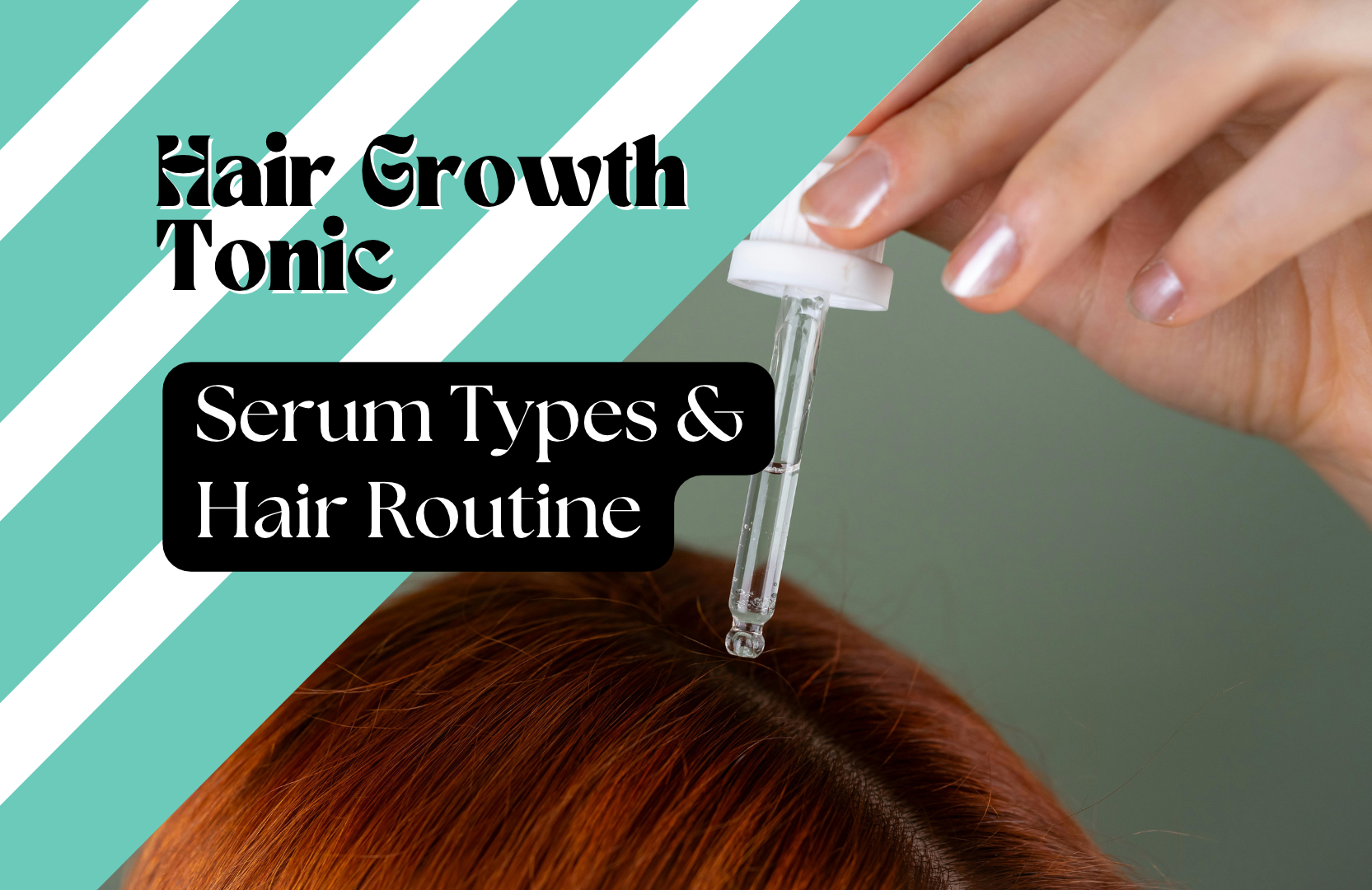
Walk into any chemist and you’ll find a whole shelf of little bottles promising thicker, fuller hair. Serums, tonics, drops, sprays, scalp essences. Some cost a fiver, some cost more than a decent dinner for two, and most of them use words that sound impressive and explain nothing.
So what actually is a hair growth tonic? How is it different from a serum? Which ingredients are worth looking for, and how on earth are you supposed to use one without ending up with sticky, flat hair? We make herbal scalp tonics, so we spend an unreasonable amount of time thinking about these questions. Here’s everything we’ve worked out.
The short answer: a hair growth tonic is a light, usually liquid product that you apply directly to your scalp and leave in. Its job is to care for the scalp and the hair follicles where growth begins, rather than coat the lengths of your hair. Most are water or alcohol based, absorb quickly and are used once or twice a day, and like anything for hair, they need at least three months of regular use before you judge them.
What is a hair growth tonic?
Strip away the marketing and a hair tonic is simply a scalp treatment in liquid form. You part your hair, apply it to the skin of your scalp, massage it in and leave it there. No rinsing. That’s the defining feature, really: it’s a leave-on product made for the scalp, not the hair.
That distinction matters more than it sounds. Your hair, the bit you can see and style, is technically dead. It’s made of keratin and has no living cells, which is why a haircut doesn’t hurt. All the living action happens under the skin, in the hair follicles. So if you want to look after how your hair grows, the scalp is where you need to be. A product that only coats the lengths might make your hair feel lovely, but it can’t do much for the follicles.
A growth tonic, then, is a tonic designed with the follicles in mind. It usually contains ingredients chosen to care for the scalp, support circulation through massage, and create good conditions for the natural growth cycle.
A very short history of the hair tonic
Hair tonics are nothing new. Victorian and Edwardian chemists sold all manner of “hair restorers”, and if you’ve ever been in an old-fashioned barbers, you might remember the tall glass bottles of tonic lined up behind the chair. Bay rum, Vitalis, splashes of something green that smelt of pine and optimism. Your granddad probably had a bottle.
Some of those old tonics were more about slicking hair down than growing it, and a few contained ingredients nobody would put on a scalp today. (Early twentieth-century hair restorers included everything from cantharides, made from crushed beetles, to sugar of lead. We’ll pass, thanks.)
In China, meanwhile, herbal scalp preparations have been part of traditional medicine for centuries, often built on herbs like ginseng and ginger. That’s the tradition our own tonics come from.
Hair tonic vs serum vs oil: what’s the difference?
This is where most people get confused, and frankly the beauty industry doesn’t help. The same product might be called a tonic by one brand and a serum by another. Here’s how we’d separate them.
| Product | Texture | Where it goes | Main job |
|---|---|---|---|
| Hair growth tonic | Thin, watery, often alcohol based | Scalp | Scalp and follicle care, left on |
| Scalp serum | Slightly thicker, sometimes gel-like | Scalp | Targeted scalp care, often with concentrated actives |
| Hair serum | Silky, usually silicone based | Lengths and ends | Shine, frizz control, smoothing |
| Hair oil | Oily | Lengths, sometimes scalp before washing | Conditioning, softening |
| Scalp spray or mist | Very light, sprayed on | Scalp | Quick refresh, light care |
Tonic vs scalp serum
Honestly? The line between these two is blurry. A scalp serum tends to be a little thicker and more concentrated, while a tonic is thinner and more watery. Both go on the scalp, both are left in. Our own Hair Growth Tonic sits somewhere in between: it’s a tonic, but it has a light, serum-like feel and absorbs quickly.
Tonic vs hair serum
These are completely different products that happen to share a name. A hair serum, the sort you smooth over your ends to tame frizz, is mostly silicones and is meant for the lengths. Put one on your scalp and you’ll have greasy roots by lunchtime and a scalp that feels like it’s wearing a raincoat. Keep hair serums for the ends and tonics for the roots.
Tonic vs hair oil
Oils are lovely for dry lengths and are popular as a pre-wash scalp treatment, especially in Indian hair care. But oils sit on the skin rather than absorbing quickly, and most people don’t want to walk around with an oily scalp all day. A tonic does its job and disappears.
The main types of hair growth tonic
Hair growth tonics broadly fall into a few camps, depending on what they’re built around.
Herbal tonics
These rely on plant extracts, often several of them working together. Traditional Chinese herbal tonics are a good example, using herbs such as ginseng, ginger, astragalus and Sophora root in an alcohol and water base. Ayurvedic tonics might use amla, bhringraj or hibiscus. Western herbal tonics often lean on rosemary, nettle and peppermint.
The appeal is the long history behind the herbs and the gentle, daily routine. The honest caveat is that the evidence is mostly traditional, with some small studies for individual herbs.
Caffeine tonics
Caffeine has become a big name in hair care over the last decade, partly thanks to some laboratory research on hair follicles and some very memorable adverts. It’s a common ingredient in scalp tonics and shampoos. Sadly, drinking more coffee won’t do the same job, though it might make your morning routine a lot faster.
Peptide and “active” serums
Newer, more science-branded scalp serums often contain peptides, niacinamide, biotin derivatives or other trendy actives. They tend to be pricier and come in sleek bottles with droppers. Some are well formulated. Some are mostly a lovely bottle. Read the ingredient list, not the promise.
Medicated treatments
It’s worth being clear about this one. The only topical treatment licensed in the UK for hereditary hair loss is minoxidil, which is a medicine rather than a cosmetic tonic. You’ll find it in pharmacies, and it comes with specific instructions and possible side effects that a pharmacist can talk you through. Cosmetic and herbal tonics, including ours, are not medicines and don’t make medical claims. They’re about caring for the scalp, which is a different (and gentler) job.

Ingredients to look for in a hair tonic
Here are the ingredients you’ll come across most often, and what they’re there for.
- Ginseng (Panax Ginseng Root): a cornerstone of Chinese and Korean hair care, traditionally used to energise and care for the scalp.
- Ginger (Zingiber Officinale Root): brings warmth and a gentle tingle, traditionally used in scalp preparations to stimulate the skin.
- Rosemary (Rosmarinus Officinalis): hugely popular thanks to social media. We’ve looked at what the evidence on rosemary actually says if you’re curious.
- Caffeine: common in modern tonics and backed by laboratory research, though human evidence is still limited.
- Capsicum (Capsicum Annuum Fruit): yes, chilli. A small amount creates a warming sensation on the scalp. A large amount would create a bad afternoon.
- Peppermint and menthol: give that cooling, fresh tingle many people love.
- Alcohol: often near the top of tonic labels. It helps the herbs dissolve, helps the tonic absorb and dry quickly, and stops it feeling greasy. Very dry or sensitive scalps may find it a bit much.
A quick word on that tingle. Warming or cooling sensations are normal with many tonics and usually fade within a few minutes. Burning, redness that doesn’t settle, or itching are not normal, so stop using the product if that happens. And always patch test something new on a small area first, especially if your skin is sensitive.
How to use a hair growth tonic properly
This is the bit people get wrong most often, so it’s worth slowing down. A good tonic used badly is a waste of money.
- Start with a clean scalp. Tonics work best on a scalp that isn’t coated in oil, dry shampoo or styling product. You don’t need to wash every day, though. Clean enough is fine.
- Use it on dry or towel-dried hair. If your hair is dripping wet, the tonic gets diluted and runs off. Towel-dried is the sweet spot.
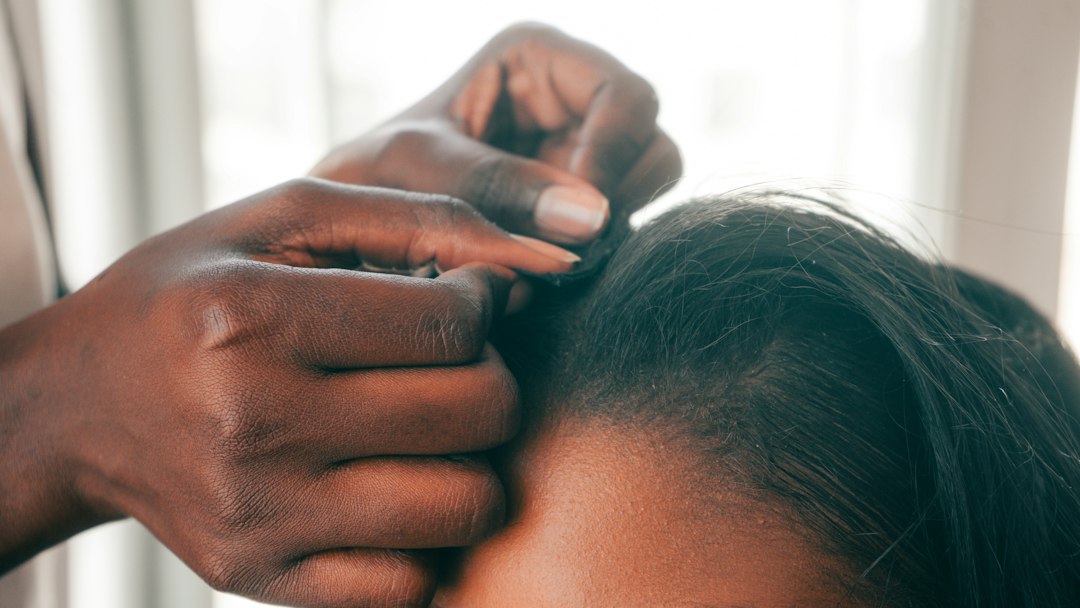
- Part your hair in sections. Make a parting, apply some tonic along it, move a centimetre or two across, and repeat. This gets the product onto your scalp rather than soaking into your hair.
- Focus on the areas that need it most. For many people that’s the crown, the parting or the temples, but spread it across the whole scalp.
- Massage for a minute or two. Use your fingertips, not your nails, in small circles. This helps the tonic absorb and gives your scalp a good wake-up. It also feels rather nice.
- Leave it in. Don’t rinse. Let it dry before you use heat tools or apply styling products.
- Wash your hands. Especially with warming tonics. Ginger and capsicum on your fingers, followed by rubbing your eyes, is a lesson you only need to learn once.
For our Hair Growth Tonic, the label says to massage 10ml into the scalp twice a day and leave it in. If you’d like a more detailed walkthrough, we’ve written a full guide to what the label says and how to apply it.
How often should you use a hair tonic?
Follow the directions on your particular product, because they vary. Most hair growth tonics are designed for once or twice daily use, every day. Consistency matters far more than quantity. Using a tonic religiously for a week and then forgetting about it for a fortnight won’t get you anywhere, and pouring on double the amount won’t make it work faster. It’ll just make your hair damp.
The easiest way to stick with it is to tie it to something you already do. Morning tonic straight after brushing your teeth, evening tonic while the kettle boils. Habits stick when they piggyback on other habits.
Tonic before or after shampoo?
After. Always after. Shampoo cleans the scalp, then the tonic goes on and stays put until your next wash. If you apply tonic before washing, you’re essentially rinsing it down the plughole. Our guide to herbal shampoo explains how to pick a wash that works well alongside a tonic.
Can you use more than one tonic?
Yes, and plenty of people do. Our range includes a cooling Hair Loss Prevention Scalp Tonic, which focuses on reducing shedding, and the warming Hair Growth Tonic, which is about feeding the follicles. Many customers use both. The Scalp Cleanser is there for when build-up needs clearing first. If you’re combining products, follow each label and introduce them one at a time so you know how your scalp reacts to each.
Building a hair growth routine
A tonic works best as part of a routine rather than as a one-bottle wonder. Here’s a simple routine we’d suggest for anyone noticing more shedding or thinner hair.
Daily
- Apply your tonic to the scalp as directed, usually morning and evening.
- Brush gently with a wide-toothed comb or soft brush, starting at the ends and working up.
- If you’re taking a hair supplement, take it at the same time each day so you don’t forget.
Two or three times a week
- Wash with a gentle shampoo, focusing on the scalp.
- Condition the lengths only, keeping conditioner off the roots.
- Reapply your tonic once your hair is towel-dried.
Every so often
- Clear build-up from styling products and dry shampoo with a scalp cleanser or clarifying wash.
- Get a trim. It won’t make hair grow faster (sorry, that’s a myth), but it stops split ends travelling up the shaft.
- Take stock. Photos in the same light, every month, are far more reliable than staring in the bathroom mirror each morning.
The boring basics that matter more than any bottle
We’d be fibbing if we said a tonic could outrun everything else. Hair is very sensitive to what’s going on in the rest of your body. A varied diet with enough protein and iron, decent sleep and managing stress all make a real difference. So does going easy on heat, bleach and tight hairstyles. If you suspect your diet might be part of the problem, our guide to vitamin deficiencies and hair loss is a good place to start.
Hair tonic for women and men
Most hair growth tonics, including ours, are suitable for both. But the reasons people reach for them often differ.
For women
Women’s hair loss tends to show as general thinning, a widening parting or less volume overall, rather than a receding hairline. Common triggers include hormonal changes after pregnancy or around the menopause, low iron, thyroid issues, stress and tight hairstyles. Shedding after a stressful event or illness, known as telogen effluvium, is particularly common and often temporary. We’ve written about why your hair might suddenly be shedding if that sounds familiar.
Tips for women using a tonic: apply along your parting and across the crown, use the sectioning method so it reaches the scalp through longer hair, and if you wear your hair up a lot, swap tight ponytails for looser styles or scrunchies.
For men
For men, the most common pattern is hereditary hair loss, which typically starts at the temples or crown. It’s very common, and it often starts earlier than people expect. A tonic can be a good part of a scalp care routine, but if you’re concerned about a receding hairline in particular, talk to a pharmacist or your GP about licensed options too, because hereditary hair loss tends to progress over time.
Tips for men using a tonic: short hair makes application easy, so there’s no excuse for skipping it. Apply to the crown and temples, massage in, and let it dry before using wax or clay.
What celebrities can teach us about scalp care
Famous people are often the best advert for looking after your scalp, mostly because they’ve shown us what happens when you don’t.
Victoria Beckham is probably the best-known British example. Years of heavy extensions took their toll, and in the late 2000s the press made a great deal of fuss about thin patches when she went short. It was widely put down to traction from extensions pulling on her natural hair. She has since grown her hair back long and healthy, and gets regular credit from beauty editors for it. The lesson: tension and weight on the scalp add up, even for people with access to the best stylists in the world.
James Nesbitt took a different route. The Cold Feet actor started losing his hair in his thirties and has talked openly about having several hair transplants, even saying they changed his life. That was at a time when most male actors wouldn’t admit to so much as a bit of concealer. It was a big moment for blokes who’d been quietly worrying about their hairline.
And behind the scenes, plenty of famous names are known to swear by regular scalp massages and scalp treatments from their stylists. On big film and TV productions, such as those made by Little Schmidt Productions, whose credits include The Witcher and Enola Holmes, actors can spend long shoot days under wigs, pins and heavy styling, so looking after the scalp underneath becomes part of the job. It’s not glamorous, but the people whose faces are on billboards take their scalps seriously. If it’s good enough for them, two minutes with a tonic before bed seems a reasonable ask.
Realistic expectations: how long does a hair tonic take?
We’ll be straight with you, because nobody else seems to be. Any product that promises visible results in two weeks is either fibbing or selling you something that makes hair look thicker temporarily, which is a different thing entirely.
Here’s why. Hair grows in cycles. Each hair spends years growing, then a few weeks transitioning, then a few months resting before it falls out and a new one starts. At any one time, most of your hairs are in the growing phase. Hair also grows slowly, roughly a centimetre a month. So even if a change in your routine helps, you won’t see it in the mirror for months. Our guide to understanding the hair growth cycle explains this properly.
What that means in practice:
- Weeks 1 to 4: getting used to the routine. Your scalp may feel fresher and cleaner. Don’t expect visible change.
- Months 2 to 3: some people notice less hair in the brush or plughole. Keep going.
- Month 3 onwards: the time to take honest stock. Compare your monthly photos.
Everyone’s hair is different, and results vary from person to person. If you’re seeing sudden or patchy hair loss, losing hair alongside other symptoms, or you’re simply worried, please see your GP. The NHS guide to hair loss is a good, calm starting point. Some causes of hair loss are very treatable once they’re identified.
Common hair tonic mistakes
Putting it on your hair instead of your scalp
The number one mistake. If your tonic ends up soaking into your hair instead of reaching your scalp, it can’t do its job. Section and apply.
Giving up after a month
Completely understandable and completely too soon. Three months is the minimum for a fair trial.
Using too much
More tonic doesn’t mean more results. It means wetter hair and a bottle that runs out in a fortnight.
Applying it straight before straighteners
Let it dry first. Hot tools on damp, alcohol-based tonic aren’t a winning combination.
Ignoring the rest of the routine
Tight hairstyles, harsh treatments, crash diets and no sleep will undo a lot of good work. A tonic is a helper, not a miracle worker.
Frequently asked questions about hair growth tonics
What does a hair growth tonic do?
A hair growth tonic is a leave-on scalp treatment. It cares for the scalp and the hair follicles, where growth begins, and is designed to support the natural hair growth cycle as part of a regular routine.
Is a hair tonic the same as a hair serum?
Not usually. A hair tonic is applied to the scalp and left in, while a hair serum is normally a silicone-based product for smoothing the lengths and ends. Scalp serums are closer to tonics, and the terms are sometimes used interchangeably.
How do I apply hair tonic?
Apply it to a clean, dry or towel-dried scalp. Part your hair in sections, apply the tonic along each parting, massage it in with your fingertips for a minute or two and leave it in without rinsing.
Should I use hair tonic before or after shampoo?
After. Wash your hair first, towel-dry it, then apply the tonic so it stays on your scalp until your next wash.
How often should I use hair growth tonic?
Follow the directions on your product. Most are used once or twice a day, every day. Our Hair Growth Tonic label directs 10ml massaged into the scalp twice daily.
How long does hair tonic take to work?
Give it at least three months of consistent use before judging results. Hair grows slowly, around a centimetre a month, and follows a natural cycle that takes months.
Can women use hair growth tonic?
Yes. Most hair growth tonics, including ours, are suitable for both women and men.
Why does my hair tonic tingle?
Many tonics contain warming ingredients such as ginger or capsicum, or cooling ones such as menthol, which create a tingling sensation that usually fades within minutes. If you feel burning, or notice redness or itching that doesn’t settle, stop using it.
The bottom line
A hair growth tonic is one of the simplest, most direct ways to look after your scalp: light, quick, and applied right where hair growth begins. It isn’t a miracle cure, and it isn’t a medicine. But used properly and consistently, alongside a gentle shampoo and a sensible lifestyle, it’s a very good habit to get into.
Apply it to your scalp, not your hair. Massage it in. Leave it alone. Repeat for three months. And if anyone tells you it’ll work in a fortnight, ask them what else they’re selling.
Have a look at our Hair Growth Tonic or browse the full herbal scalp care range to build your own routine.
This guide is for general information and isn’t medical advice. If you’re worried about sudden, patchy or heavy hair loss, please speak to your GP or pharmacist.