
Fo-Ti (Fallopia Multiflora): Ingredient Guide


If you’ve ever gone looking for herbal help with grey hairs or thinning, you’ll have met fo-ti sooner or later. It turns up in supplement shops, in Chinese medicine cabinets and in a fair few late-night internet rabbit holes. It also goes by about five different names, which doesn’t help anyone.
So here’s our plain-English guide to fo-ti: what it actually is, where the legend comes from, why the botanists keep renaming it, how it’s traditionally prepared, and the safety bits that every honest seller should tell you about (and plenty don’t). We sell a fo-ti supplement ourselves, so we’ve had to get this right.
The short answer: fo-ti is the root of Fallopia multiflora (also called Polygonum multiflorum or Reynoutria multiflora), a climbing plant known in China as he shou wu. It is one of the best-known herbs in traditional Chinese medicine and has long been traditionally used for hair and premature greying. It’s usually taken in a prepared form, and because it has been linked to liver problems in rare cases, it should be used with care and with advice if you have any health conditions.
What is fo-ti, exactly?
Fo-ti is a vine. Not a glamorous one, either. It’s a twisting climber in the knotweed family, with heart-shaped leaves and small, frothy white flowers, and it’s native to China. The part that matters is underneath: a knobbly, reddish-brown tuberous root that looks a bit like a sweet potato that’s been through something.
That root is what ends up in Chinese herbal formulas, tablets and teas. In China it’s called he shou wu (何首乌). “Fo-ti” is the name you’ll mostly see in English-speaking shops, and it seems to have been coined by Western herbal sellers in the twentieth century. Nobody has ever been entirely sure why. It sounds a bit like a dance move from the 1970s.
If you only remember one thing from this section, make it this: fo-ti, he shou wu, Fallopia multiflora, Polygonum multiflorum and Reynoutria multiflora are all the same plant. The label might use any of them.
Why does it have so many names?
Blame the botanists. Plant names change when scientists learn more about how species are related, and this one has been shuffled between families more often than a supermarket meal deal.
It was first described as Polygonum multiflorum, which is still the name you’ll find in most scientific papers and older herbal books. Later it was moved into the genus Fallopia, which is the name many UK and European suppliers use, including us. More recently, botanical databases have tended to list it as Reynoutria multiflora. Same plant. Different filing cabinet.
There’s also a name to watch out for in Chinese medicine itself. The root is He Shou Wu, but the vine stem of the same plant is used separately and goes by Ye Jiao Teng. They’re traditionally used for quite different things, so if you’re buying loose herbs, it’s worth knowing which part you’re getting.

The legend of Mr He’s black hair
Every famous herb needs a good origin story, and fo-ti has a cracker.
The name he shou wu is usually translated as something like “Mr He’s black head” or “black-haired Mr He”. According to a tale written down during the Tang dynasty, over a thousand years ago, a man called He Tianer was in a bad way. He was in his late fifties, frail, without a wife or children, and generally feeling sorry for himself. One night, after a few drinks, he lay down in the hills and noticed two vines twisting around each other in the moonlight.
Being curious (or possibly just a bit merry), he dug up the root and, on the advice of a passing stranger, started eating it. The story goes that he became healthier, his grey hair turned black again, he married, had children, and lived to a ripe old age. His son and grandson took the root too, and the family became famous for their dark hair. Hence the name.
Now, we’d love to tell you that’s a documented clinical trial. It isn’t. It’s a folk tale, and a rather lovely one, but it’s the reason fo-ti has been tied to hair and ageing in Chinese culture for centuries. It’s also a reminder that marketing campaigns with miraculous before-and-after stories are nothing new. The Tang dynasty got there first.
How fo-ti is used in traditional Chinese medicine
In traditional Chinese medicine (TCM), hair isn’t treated as something separate from the rest of the body. Classic texts describe hair as an outward sign of the body’s inner condition, especially what TCM calls the kidney and liver systems, and of “blood” and “essence” (jing). It’s a very different way of thinking from Western medicine, so these terms don’t map neatly onto your actual kidneys and liver. They’re ideas about overall balance.
Within that system, prepared he shou wu is traditionally used to nourish the liver and kidney systems and to support the blood and essence. Healthy, dark hair is seen as one sign that those systems are in good order, which is why fo-ti became a go-to herb for premature greying and for hair that’s lost its strength.
It rarely works alone. TCM tends to combine herbs into formulas, where each ingredient has a role, a bit like a football team (though hopefully better organised than England in a penalty shoot-out). Fo-ti is often paired with herbs such as oxknee root (Achyranthes bidentata, known as niu xi), goji berry, dang gui and dodder seed.
Qi Bao Mei Ran Dan: the classic hair formula
The most famous of those formulas is Qi Bao Mei Ran Dan, which translates roughly as “Seven Treasures for Beautiful Whiskers”. It’s a centuries-old recipe built around he shou wu, and as the name suggests, it was traditionally used to keep the hair and beard dark.
The idea of a gentleman centuries ago fretting over his grey whiskers is oddly reassuring. Some worries really are timeless.
Our own Fo-Ti Tablets are based on this traditional formula, combining fallopia multiflora with oxknee root.
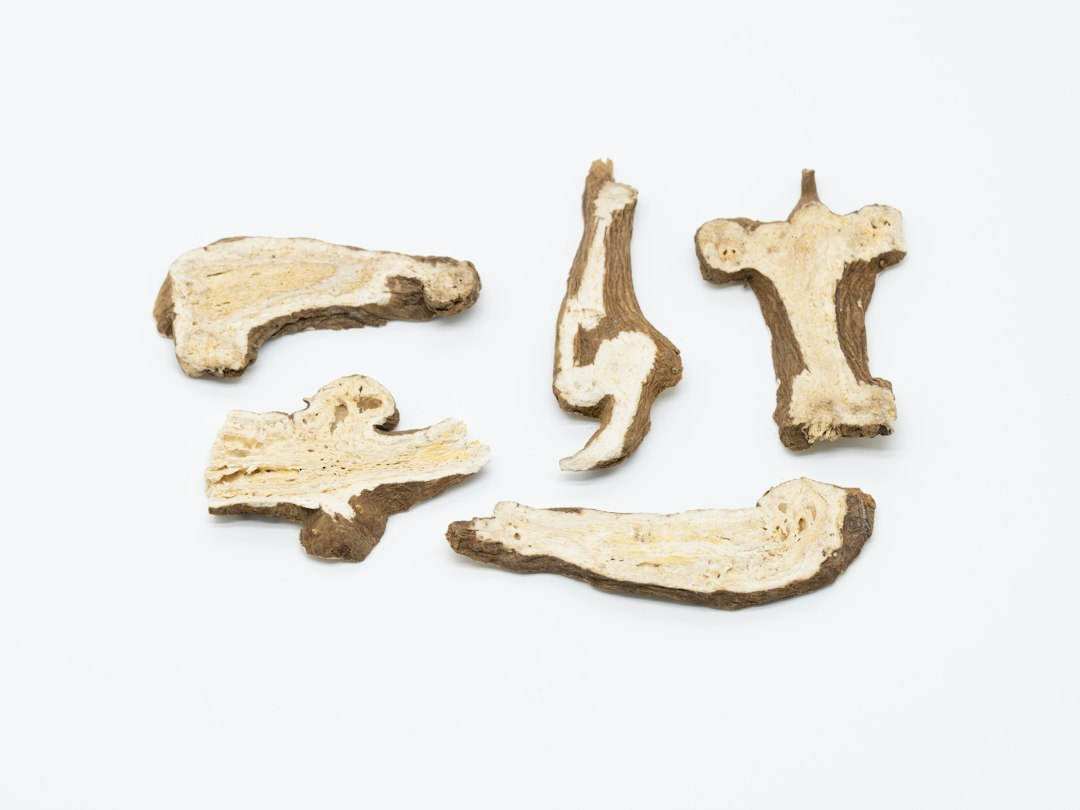
Raw vs prepared fo-ti: why it matters
This is the bit that most supplement listings skip, and it’s genuinely important.
In Chinese medicine, he shou wu comes in two forms:
- Raw he shou wu (sheng he shou wu) is simply the dried, sliced root. Traditionally it was used for quite different purposes, such as moving the bowels, and it isn’t the form associated with hair.
- Prepared he shou wu (zhi he shou wu) is the root after it has been processed, traditionally by steaming or stewing it in black soybean juice, sometimes over several rounds. This turns the root a deep, almost black colour, and it’s this prepared form that’s traditionally used for hair and greying.
The preparation isn’t just tradition for tradition’s sake. Studies suggest processing changes the root’s chemistry, reducing some of the compounds (anthraquinones) that are linked to the raw root’s laxative effect. Whether it removes every concern is still being researched, which brings us neatly to the most important section of this guide.
Fo-ti safety: what you need to know
We’d be doing you a disservice if we wrote a cheerful guide to fo-ti and skipped this part. So let’s be clear about it.
Fo-ti has been linked to liver injury in rare cases. Reports have come from China, Korea, Japan, Australia and the UK, among others. A systematic review published in 2015 looked at 450 reported cases of liver damage associated with he shou wu. Most people recovered after they stopped taking it, but a small number of cases were serious. The UK’s medicines regulator, the MHRA, flagged reports of liver problems linked to the herb back in the mid-2000s, and Australia’s regulator requires oral products containing it to carry a liver warning on the label.
The research points to a few patterns. Problems seem more likely with high doses, long-term use, raw rather than prepared root, and in people who already have liver issues. Some people also seem to be more sensitive than others, possibly for genetic reasons.
So, our honest advice:
- Speak to your GP or pharmacist first if you have a liver condition, take any regular medication, drink heavily, or are pregnant or breastfeeding.
- Stick to the dose on the pack. More is not better with herbs. It’s just more.
- Don’t stack products. Fo-ti turns up in plenty of hair supplements and teas, so check you’re not taking it from three places at once.
- Know the warning signs. Stop taking it and get medical advice promptly if you notice yellowing of the skin or eyes, dark urine, unusual tiredness, loss of appetite, nausea or pain in the upper right side of your tummy.
- Not for children.
None of this means fo-ti is some sort of villain. Lots of everyday things, from paracetamol to green tea extract, carry rare risks to the liver when used carelessly. It just means it deserves respect, and you deserve to know.
Fo-ti, grey hair and hair loss: realistic expectations
Most people come to fo-ti for one of two reasons: the first few silver strands have arrived uninvited, or their hair isn’t as thick as it used to be. Let’s take them one at a time.
What causes grey hair?
Your hair gets its colour from pigment cells called melanocytes, which live in the hair follicle. Over time, the stem cells that keep those pigment cells topped up gradually run out, so new hairs grow through with less colour, and eventually none. Grey hair is really a mix of pigmented and unpigmented hairs, and white hair has no pigment at all.
When that happens is mostly down to your genes. If your mum or dad went grey early, there’s a decent chance you will too. Other factors include smoking, some vitamin deficiencies (B12 in particular), thyroid problems and, yes, stress. A Harvard study in mice in 2020 found that intense stress could deplete those pigment stem cells, which gave scientists a proper mechanism behind the old wives’ tale about going grey overnight. (It still doesn’t explain why your boss has a full head of brown hair despite being the source of most of yours.)
If you’re going grey unusually early, or very suddenly, it’s worth asking your GP to check things like B12, iron and thyroid function. Some of those causes are fixable.
So can fo-ti help?
Here’s the honest picture. Fo-ti has been traditionally used for hair and premature greying for centuries, and that long tradition is the main reason people take it. There’s some interesting laboratory research on compounds found in the root, but robust human trials are thin on the ground. Nobody can promise it will change your hair colour, and you should be wary of anyone who does.
What we’d say is this: fo-ti is a traditional herbal approach for people who like the idea of supporting their hair from within, alongside good everyday hair care. If that’s you, go in with realistic expectations, take it consistently, and give it at least three months, because hair grows slowly. Our guide to understanding the hair growth cycle explains why patience matters so much.
And if your hair is thinning rather than greying, there are plenty of other things worth checking first. Low iron and other nutritional gaps are common culprits, especially for women. We cover those in our guide to vitamin deficiencies and hair loss.
Famous heads that went grey early
If you’re feeling a bit glum about your first grey hairs, take comfort from the fact that some very famous people got there before you, and did rather well out of it.
Anderson Cooper, the CNN anchor, started going grey in his early twenties and was completely silver by his mid-thirties. It has become his trademark, though he has admitted in interviews that he’d quite like his brown hair back. Being called a silver fox on national television apparently only goes so far.
Then there’s the presidential effect. Barack Obama’s hair went noticeably greyer during his eight years in the White House, and the before-and-after photos did the rounds endlessly. Whether that was genes, age or the job (we’d guess a bit of all three), it’s a good example of how much attention people pay to grey hair, even when you’re running a country.
Plenty of celebrities, of course, simply keep the colourist on speed dial. There’s no shame in that either. Hair dye has been around since the Romans, who apparently used everything from fermented leeches to walnut shells. We’ll stick with herbs, thanks.

How to choose a fo-ti supplement in the UK
If you’ve decided fo-ti is worth a try, here’s what we’d look for on the pack.
1. The botanical name
Look for Fallopia multiflora, Polygonum multiflorum or Reynoutria multiflora on the label. If the pack only says “fo-ti” and nothing more specific, that’s a bit vague for our liking.
2. Prepared or raw
For hair, the traditional choice is prepared root. Good suppliers will tell you which form they use. If you can’t find out, ask them.
3. A sensible formula
Traditional formulas combine fo-ti with supporting herbs rather than piling in huge amounts of it alone. Be wary of products shouting about “mega strength” or “10x concentrated” extracts. With this particular herb, bigger isn’t the selling point it sounds like.
4. Clear directions and warnings
A responsible product will give you a clear daily dose and sensible safety advice, including who shouldn’t take it. If a fo-ti product makes no mention of the liver at all, that tells you something about the seller.
5. Honest claims
In the UK, supplements aren’t allowed to claim they treat or cure conditions. If a product promises to “reverse grey hair” or “cure baldness”, it’s either breaking the rules or stretching the truth until it squeaks. Probably both.
6. Where it comes from
Buy from a supplier who can tell you where the product is made and who stands behind it. Bargain listings from unknown overseas sellers on marketplace sites are a gamble we wouldn’t take with a herb that needs careful preparation.
How fo-ti fits into a wider hair routine
We think of fo-ti as the “inside” part of an inside-and-out approach. Tablets work from within, in the traditional sense, while scalp products look after the outside, which is where hair actually grows from.
A typical routine with our range might look like this:
- Wash two or three times a week with a gentle herbal shampoo. Our guide to herbal shampoo explains what to look for.
- Apply a scalp tonic such as the Hair Loss Prevention Scalp Tonic, massaged in and left on.
- Take your fo-ti tablets daily, as directed on the pack.
- Look after the basics: a varied diet with enough protein and iron, decent sleep, and less heat styling and tight hairstyles.
That last step sounds boring, but it does a lot of the heavy lifting. No herb can out-supplement a diet of crisps and four hours’ sleep a night. We’ve tried. (Well, one of us has.)
Common myths about fo-ti
“It’s natural, so it’s completely safe.”
As we’ve covered, fo-ti has been linked to rare liver problems. Natural and harmless aren’t the same thing. Arsenic is natural.
“It will turn grey hair black again.”
That’s the legend talking. Fo-ti is traditionally used for greying, but there’s no reliable evidence it reverses grey hair, and any product claiming it will is overpromising.
“Fo-ti and he shou wu are different herbs.”
They’re the same root with different names. Shops sometimes list them separately, which is how people end up accidentally doubling up.
“The more you take, the faster it works.”
Absolutely not. With fo-ti in particular, higher doses and longer use are linked to a higher risk of side effects. Follow the pack.
“You’ll see results in a fortnight.”
Hair grows about a centimetre a month. Anything that affects hair takes months to show, not weeks.
Frequently asked questions about fo-ti
What is fo-ti?
Fo-ti is the root of Fallopia multiflora (also called Polygonum multiflorum or Reynoutria multiflora), a climbing plant native to China. Known in Chinese medicine as he shou wu, it has long been traditionally used for hair and premature greying.
Is fo-ti the same as he shou wu?
Yes. Fo-ti is the common English name and he shou wu is the Chinese name for the same root. Polygonum multiflorum, Fallopia multiflora and Reynoutria multiflora are its botanical names.
What is fo-ti traditionally used for?
In traditional Chinese medicine, prepared fo-ti is traditionally used to nourish what TCM calls the liver and kidney systems and to support blood and essence. It is best known for its traditional use for hair health and premature greying.
Is fo-ti safe?
Fo-ti has been linked to liver injury in rare cases, particularly with high doses, long-term use or raw root. Speak to your GP or pharmacist before taking it if you have a liver condition, take other medicines, or are pregnant or breastfeeding, and stop and seek advice if you feel unwell.
What’s the difference between raw and prepared fo-ti?
Raw fo-ti is the dried root, while prepared fo-ti has been processed, traditionally by cooking it in black soybean juice. The prepared form is the one traditionally used for hair, and processing changes some of the root’s natural compounds.
How long does fo-ti take to work?
Give any hair supplement at least three months of consistent daily use. Hair grows slowly, around a centimetre a month, so changes take time to appear.
Can I take fo-ti with a scalp tonic?
Yes. Many people take fo-ti tablets alongside scalp tonics and a gentle shampoo, as an inside-and-out approach to hair care.
Can men and women take fo-ti?
Yes, adults of any gender can take it, following the directions on the pack. It isn’t suitable for children, and pregnant or breastfeeding women should seek advice first.
The bottom line
Fo-ti is one of the oldest and most respected hair herbs in Chinese medicine, with a legend that’s survived over a thousand years and a traditional formula that people still use today. It’s also a herb that deserves to be treated properly: prepared the traditional way, taken at sensible doses, and avoided or discussed with a professional if your liver isn’t in tip-top shape.
Take it for what it is, a traditional way to support your hair from within, rather than a miracle in a bottle, and you’ll get on with it just fine. And if you do go grey anyway? Anderson Cooper seems to be managing.
Have a look at our Fo-Ti Tablets or browse the wider hair supplements range if you’d like to find out more.
This guide is for general information only and isn’t medical advice. Supplements aren’t a substitute for a varied, balanced diet and a healthy lifestyle. If you’re worried about hair loss, grey hair or your health, please speak to your GP or pharmacist.