
Herbal Shampoo Ingredients: A Buying Guide

Shampoo labels are written in a language that seems designed to make you give up and buy whatever smells nicest. Long Latin names, chemistry that sounds alarming, and a front label that tells you almost nothing useful. It’s no wonder most of us just pick the bottle with the prettiest leaf on it.
This guide is the antidote. We’ll go through the ingredients you’ll actually find in herbal shampoo, group by group, explain what each one is doing in there, and show you how to tell a genuinely herbal formula from one that’s just waving a sprig of rosemary at you. By the end you should be able to judge a bottle in about ten seconds flat, which is roughly how long most of us spend in the shampoo aisle anyway.
If you want the bigger picture first, including the different types of herbal shampoo and how to choose one for your hair, start with our full guide to herbal shampoo.
The short answer: every herbal shampoo contains the same basic groups of ingredients: water, cleansers, the herbal extracts, conditioning agents, thickeners, a preservative and usually fragrance. What makes a shampoo genuinely herbal is how many botanicals it contains and how high up the ingredient list they appear, not the picture on the front.
How to read the ingredient list
Before we get to the ingredients themselves, three rules that make any UK shampoo label make sense.
Rule one: order matters
Ingredients over 1% must be listed in descending order of how much is in there. So the first few ingredients make up most of the bottle. Anything at 1% or below can be listed in any order at the end. If the herb on the front of the bottle doesn’t appear until after the preservative, there’s very little of it.
Rule two: everything uses its INCI name
INCI is the international naming system for cosmetic ingredients. Plants are listed by their Latin botanical names, which is why ginseng appears as Panax Ginseng Root and liquorice as Glycyrrhiza Uralensis Root. It looks intimidating, but it’s actually helpful: it tells you exactly which plant and which part of it is in there.
Rule three: water nearly always comes first
Aqua is water. Shampoo has to be liquid, so water is almost always the main ingredient. That’s not a con. A shampoo where water isn’t first is either a solid bar or something unusual.
The cleansers (surfactants)
These do the actual washing. Without them, you’re rinsing your head with herbal tea, which is lovely but won’t shift a week’s worth of dry shampoo.
Surfactants have one end that’s attracted to water and one end that’s attracted to oil, so they grab grease and let water carry it away. Most shampoos use two or three together: a main cleanser and one or two gentler ones to soften it.
Sulphates
- Sodium Lauryl Sulfate (SLS). The strongest and the one most likely to irritate a dry or sensitive scalp. Less common in good shampoos these days.
- Sodium Laureth Sulfate (SLES) and Ammonium Laureth Sulfate. Milder relatives of SLS, and the most widely used main cleansers. Effective, good lather, fine for most scalps.
Milder cleansers
- Cocamidopropyl Betaine. A gentle coconut-derived cleanser that’s often paired with a sulphate to make it kinder and boost the lather.
- Coco-Glucoside, Decyl Glucoside, Lauryl Glucoside. Very mild sugar-based cleansers, common in sulphate-free shampoos.
- Sodium Cocoyl Isethionate and Sodium Lauroyl Sarcosinate. Gentle cleansers that feel soft on the scalp, often used in sulphate-free and premium formulas.
What to look for
If your scalp is normal or oily, a formula with a laureth sulphate balanced by a betaine is usually perfectly comfortable. If your scalp is dry, sensitive or prone to eczema, or your hair is curly or coloured, look for a sulphate-free formula built on glucosides or isethionates instead. Neither is better across the board. They just suit different heads.
The herbal extracts
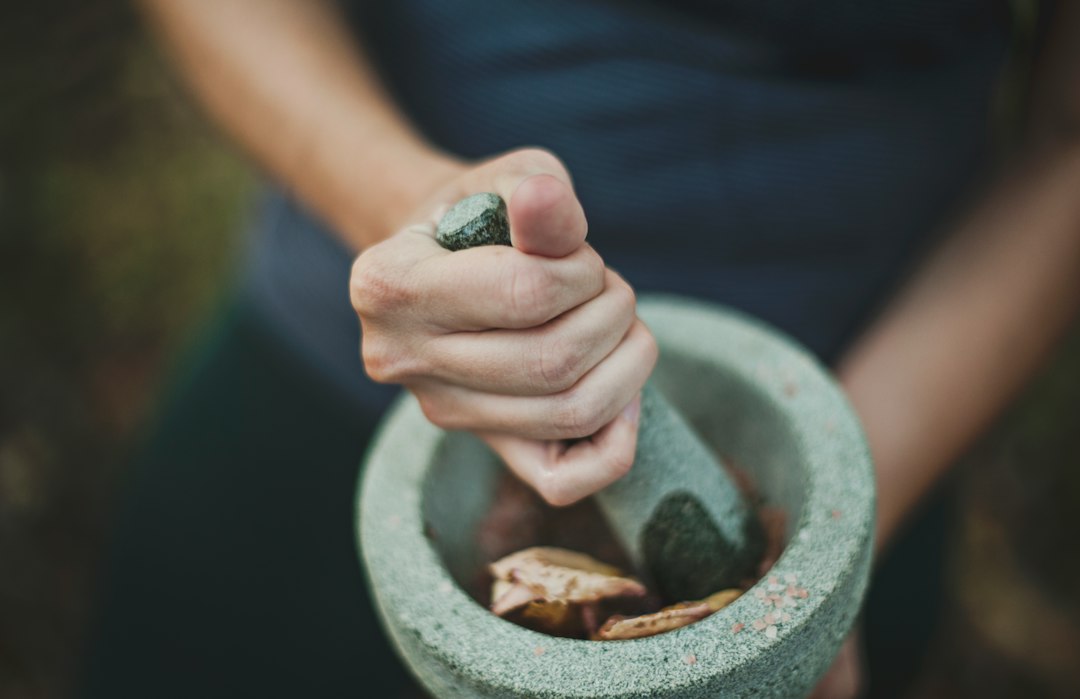
This is the bit you’re paying for, so it’s worth looking closely. Herbal extracts are made by soaking or steeping parts of a plant (roots, leaves, flowers, seeds) to draw out their natural compounds. In a well-made herbal shampoo, they’re there to soothe, calm and care for the scalp alongside the cleansers.
Herbs common in Chinese herbal shampoos
- Sophora root (Sophora Angustifolia Root or Sophora Flavescens Root). A bitter root traditionally used in herbal washes for itchy, oily or congested scalps.
- Ginseng (Panax Ginseng Root). One of the most famous herbs in Chinese and Korean hair care, traditionally used to energise the scalp.
- Chinese liquorice (Glycyrrhiza Uralensis Root). Traditionally used to soothe irritated skin.
- White mulberry leaf (Morus Alba Leaf). A traditional Chinese ingredient for nourishing hair and scalp.
- Rhubarb root (Rheum Palmatum Root). Used in Chinese herbal washes for cleansing.
- Vaccaria seed (Vaccaria Semen Seed). A seed rich in natural saponins, the plant compounds that lather gently in water.
Herbs common in Western and Ayurvedic shampoos
- Rosemary (Rosmarinus Officinalis). The internet’s favourite hair herb. Our piece on what the evidence on rosemary actually says is worth a read before you get too excited.
- Nettle (Urtica Dioica). A traditional British hair rinse herb.
- Chamomile (Chamomilla Recutita). Calming, and it can gently brighten fair hair over time.
- Tea tree (Melaleuca Alternifolia). Popular for oily and flaky scalps.
- Amla (Phyllanthus Emblica) and shikakai (Acacia Concinna). Ayurvedic staples for shine and gentle cleansing.
How to tell if there’s a meaningful amount
Look at where the herbs sit. If they appear near the top of the list, before or around the cleansers, there’s a decent amount in there. If they’re all bunched at the very end after the fragrance and preservative, they’re probably there mostly for the label. Also count them: one herb on its own is a nod, several working together is a formula.
A useful example is our own herbal shampoo. Its label lists seven botanicals (Sophora root, ginseng, vaccaria seed, liquorice, white mulberry leaf, phryma and rhubarb root) straight after water, before any of the cleansers. That’s what a genuinely herbal formula tends to look like.
Conditioning agents
Shampoo strips some oil from hair as it cleans, so most formulas add a little conditioning to stop hair feeling like straw. You’ll typically see a few of these:
- Polyquaternium ingredients (for example Polyquaternium-7 or -10). Conditioning polymers that help hair feel smoother and easier to comb.
- Silicones such as Dimethicone or Dimethiconol. Add slip and shine. Small amounts in shampoo are fine for most people. If you have very fine hair that goes flat easily, you might prefer silicone-free formulas.
- Guar Hydroxypropyltrimonium Chloride. A conditioner made from guar beans, common in gentler formulas.
- Panthenol. A form of vitamin B5 that helps hair hold moisture.
- Glycerin. Attracts moisture. Found in almost everything.
Scalp-care actives
Some herbal shampoos include a targeted ingredient alongside the herbs, usually for a flaky or itchy scalp.
- Climbazole. Widely used in shampoos that help with dandruff. Our own shampoo contains it.
- Piroctone Olamine. Another common anti-flake ingredient, often found in European formulas.
- Salicylic Acid. A gentle exfoliant that helps loosen flakes and oil.
- Zinc Pyrithione. A long-standing anti-dandruff ingredient.
If flakes are your main problem, a herbal shampoo with one of these is often a good middle ground: plant-based care with a proven helper. If flakes don’t settle after a few weeks, see your pharmacist, because not every flaky scalp is dandruff.
Thickeners, pearlisers and texture
These make shampoo feel like shampoo rather than coloured water. They don’t do much for your hair, but they make the product easier to use.
- Sodium Chloride. Yes, salt. A common, cheap thickener. Very high levels can be drying for some hair types.
- Glycol Distearate. Gives shampoo that pearly, creamy look.
- Cocamide DEA or Cocamide MEA. Thicken the formula and boost lather.
- Acrylates or acrylamide copolymers. Thickening and suspending agents.
Preservatives
Anything that contains water needs a preservative. Without one, your lovely herbal shampoo would grow mould in your warm, steamy bathroom within weeks. Herbs and water are, after all, a pretty good recipe for growing things.
Common ones include Phenoxyethanol, Sodium Benzoate, Potassium Sorbate and Methylchloroisothiazolinone (often shortened to MCI or listed with Methylisothiazolinone). All are permitted in cosmetics at controlled levels. The isothiazolinones are rinse-off friendly but are known skin sensitisers for some people, so if you have a known allergy to them, check the label carefully.
A note on preservative-free claims: a water-based shampoo without any preservative isn’t something to celebrate. It’s something to keep an eye on.
Fragrance
Listed as Parfum on UK labels. One word can cover a blend of dozens of ingredients. Most people are fine with it, and a nice smell is a big part of why people enjoy their shampoo. But if you have a sensitive scalp or a fragrance allergy, look for fragrance-free formulas, or ones that list the specific allergens (such as linalool or limonene) so you know what you’re dealing with.
pH adjusters and the rest
At the very end of most lists you’ll find small amounts of things like Citric Acid (to adjust pH), Disodium EDTA (to help the shampoo work in hard water) and various salts. They’re there to make the formula stable and effective. Nothing to worry about.
Red flags and things worth checking
No ingredient list is perfect, but these are worth a second look.
- Herbs only at the very end. A herbal shampoo where the herbs come after the preservative is herbal in name only.
- Big claims on the front. Anything promising to stop hair loss, regrow hair or cure dandruff is overpromising. Cosmetics can’t make medical claims in the UK.
- “Chemical-free”. Water is a chemical. So is every herb. This phrase tells you more about the marketing team than the shampoo.
- Sulphate-free on a scalp that needs a proper clean. Gentle isn’t always better if you use lots of styling products. You may need something with more cleaning power, at least now and then.
- Vegan or cruelty-free claims you can’t verify. Look for a recognised certification mark if these matter to you. Some ingredient names, such as anything containing “tallow” or “lanolin”, are traditionally animal-derived, so it’s always worth asking the brand.
A quick buying checklist
Next time you’re in the aisle, turn the bottle round and ask yourself:
- Where are the herbs? Near the top is good. Bunched at the end is not.
- How many are there? Several botanicals working together suggests a proper formula.
- Which cleansers? Laureth sulphates for normal or oily scalps, glucosides or isethionates for dry, sensitive or coloured hair.
- Any scalp actives? Useful if flakes or itching are a problem.
- Silicones? Fine for most, but skip them if your hair goes flat easily.
- Fragrance and preservatives? Check if you have sensitive skin or known allergies.
- Are the claims realistic? If it sounds like a miracle, it isn’t one.
Frequently asked questions about herbal shampoo ingredients
What ingredients are in herbal shampoo?
Herbal shampoo contains water, cleansers (surfactants), herbal extracts, conditioning agents, thickeners, a preservative and usually fragrance. The herbal extracts are what make it herbal, and in a good formula they appear high up the ingredient list.
Are all herbal shampoos natural?
No. Almost all herbal shampoos combine plant extracts with conventional cleansers, conditioners and preservatives. That’s normal and necessary for a shampoo that cleans well and stays fresh. “Herbal” and “natural” have no legal definition for cosmetics in the UK.
Which herbs are best in shampoo?
It depends on your scalp. Sophora root, tea tree and rosemary are popular for oily scalps. Liquorice and chamomile suit sensitive or itchy scalps. Ginseng is a classic in Chinese and Korean hair care.
How do I know how much herb is in a shampoo?
Check where the herbs appear in the ingredient list. Ingredients above 1% are listed in order of quantity, so herbs near the top mean a meaningful amount. Herbs listed after the preservative and fragrance are present in very small amounts.
Do herbal shampoos have preservatives?
Yes, and they should. Any shampoo containing water needs a preservative to stop mould and bacteria growing. Common ones include phenoxyethanol, sodium benzoate and methylchloroisothiazolinone.
Are silicones bad in shampoo?
Not for most people. Small amounts help hair feel smoother. If you have very fine hair that goes flat quickly, or you use a lot of other silicone products, a silicone-free shampoo may suit you better.
The bottom line
The front of a shampoo bottle is marketing. The back is the truth. Once you know the basic groups (cleansers, herbs, conditioners, actives, texture, preservatives and fragrance), every label starts to make sense, and you can spot a genuinely herbal formula in seconds.
And next time someone tells you their shampoo is chemical-free, you’ll know exactly how to raise an eyebrow.
This guide is for general information only. If you have a sensitive scalp, known allergies or a persistent scalp problem, speak to your pharmacist or GP before trying new products.