
What Causes Hair Thinning and Hair Loss? 10 Common Reasons Explained

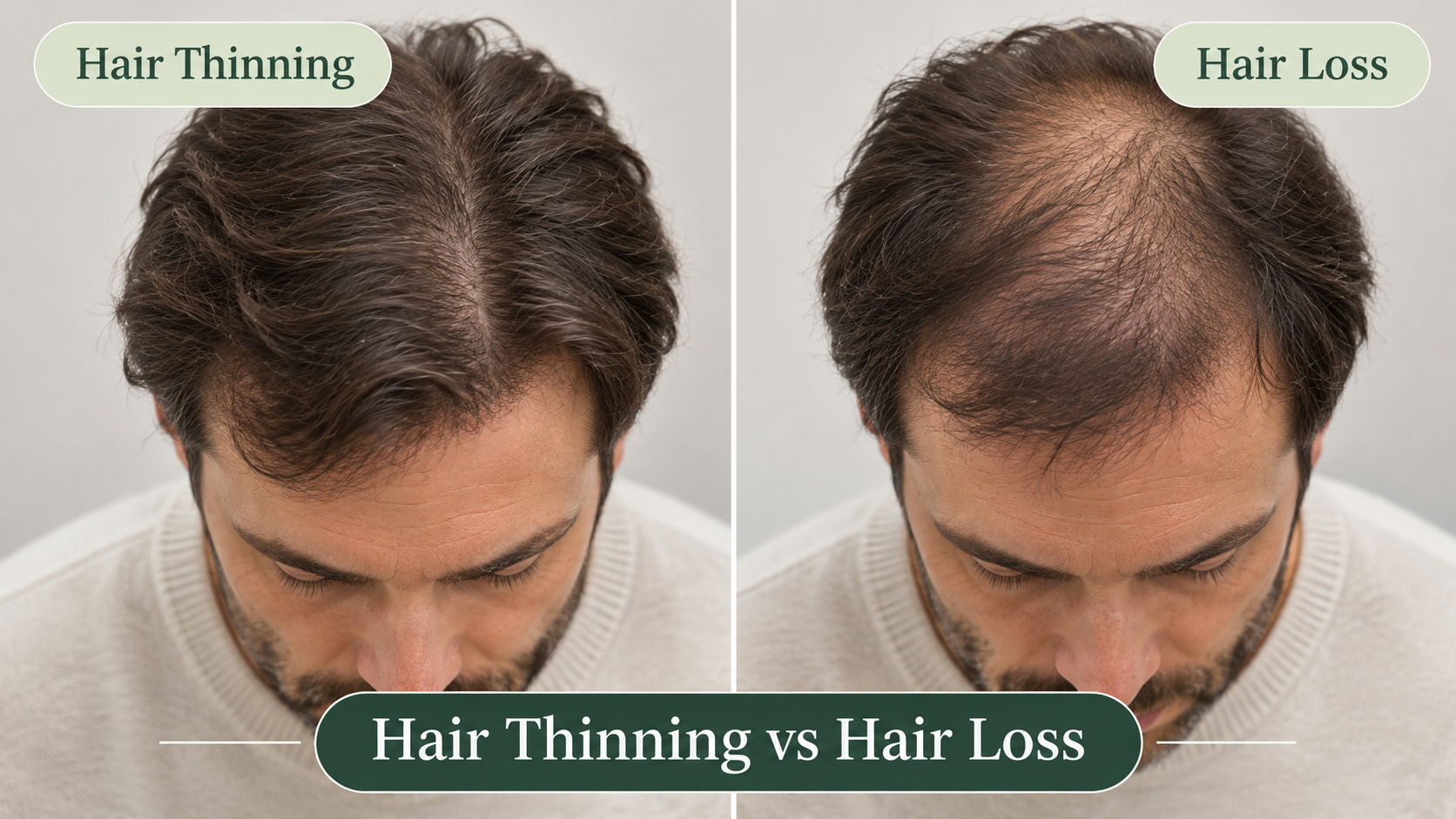
What causes hair thinning and hair loss? Common causes include genetics, hormonal changes, ageing, significant stress, nutritional deficiencies, certain medical conditions and repeated tension on the hair. Some people experience gradual thinning over several years, while others notice sudden increases in shedding. Understanding the pattern of hair loss can help identify possible causes and when to seek professional advice.
If you have noticed more hair in your brush, a widening parting or reduced hair volume, you are not alone. Hair thinning is common in both men and women, although the underlying reasons can vary considerably.
This guide explains ten common causes of hair loss, how to distinguish thinning from normal shedding and the everyday habits that can help you care for your hair and scalp.
What Is the Difference Between Hair Thinning and Hair Loss?
Although the terms are often used interchangeably, hair thinning and hair loss can describe different changes.
Hair thinning usually refers to a gradual reduction in hair density, thickness or overall volume. You might notice that your ponytail feels smaller, your scalp becomes more visible or your hair parting appears wider.
Hair loss is a broader term describing the loss of hair from the scalp or other areas. It may involve gradual thinning, increased shedding, distinct bald patches or a receding hairline.
Hair shedding is also a normal part of the natural hair growth cycle.
According to the NHS, losing approximately 50 to 100 hairs per day is normal.
The key distinction is whether hair is shedding at its usual rate or whether a change in hair growth, shedding or follicle activity is affecting overall density.
| Hair change | What you may notice |
|---|---|
| Normal shedding | Loose hairs during brushing, washing or styling |
| Gradual thinning | Reduced volume, wider parting or a more visible scalp |
| Pattern hair loss | Receding hairline, crown thinning or thinning along the parting |
| Excessive shedding | More loose strands than usual over a period of time |
| Patchy hair loss | Distinct areas where hair is missing |
| Hair breakage | Short, snapped strands and uneven-looking lengths |
Noticing one of these changes does not establish its cause. Different conditions can produce similar symptoms.
10 Common Causes of Hair Thinning and Hair Loss
There are many possible reasons for hair thinning and loss. Some are inherited, while others relate to changes in the body, haircare habits or underlying health conditions.
1. Genetics and Hereditary Hair Loss
Genetics is one of the most common explanations for progressive hair thinning.
Hereditary pattern hair loss, also called androgenetic alopecia, affects both men and women.
In men, it commonly appears as a receding hairline or gradual thinning around the crown.
In women, the first noticeable changes may include a widening parting or reduced density across the top of the scalp.
The condition involves genetic susceptibility and the influence of hormones on hair follicles. Over time, affected follicles may produce progressively finer hairs.
The British Association of Dermatologists provides detailed patient information about female pattern hair loss.
Hereditary hair loss typically develops gradually, although the rate of progression varies between individuals.
2. Hormonal Changes
Hormones influence the hair growth cycle, which is why hormonal changes can sometimes be associated with thinning or increased shedding.
Examples include changes related to:
- Pregnancy and the postpartum period
- Menopause
- Thyroid disorders
- Certain hormonal conditions
During pregnancy, some people notice changes in hair thickness. After childbirth, a temporary increase in hair shedding may occur as hormone levels change.
Menopause is another period when changes in hair density may become more noticeable.
However, not every change in hair thickness is caused by hormones. A healthcare professional can help identify whether hormonal factors may be relevant.
3. Significant Stress and Telogen Effluvium
Physical or emotional stress can sometimes affect the normal hair growth cycle.
A condition called telogen effluvium occurs when more hairs than usual enter the resting and shedding phases.
Potential triggers include significant illness, surgery, childbirth, severe emotional stress or rapid weight loss.
Hair shedding may become noticeable several months after the triggering event rather than immediately.
The British Association of Dermatologists’ guide to telogen effluvium explains how this condition differs from other forms of hair loss.
Temporary shedding can improve when the underlying trigger has resolved, although the course varies.
If shedding is persistent or substantial, it is sensible to seek professional advice rather than assuming stress is the cause.
4. Nutritional Deficiencies
Hair follicles require adequate nutrition to support their normal activity.
Certain nutritional deficiencies can contribute to hair-related changes.
Depending on the individual, these may involve:
- Iron: Low iron stores can be associated with increased shedding in some circumstances.
- Protein: Insufficient dietary protein can affect normal hair growth.
- Zinc: Deficiency may contribute to hair changes.
- Vitamin B12: Low levels may be relevant in some individuals, although not all thinning hair is caused by B12 deficiency.
Restrictive diets, inadequate nutritional intake and certain health conditions may increase the likelihood of deficiencies.
However, taking additional vitamins or supplements without an identified deficiency is not a reliable solution to hair loss.
The American Academy of Dermatology identifies nutritional deficiencies among the possible causes of hair loss.
If you suspect a deficiency, speak to your GP about whether an assessment or blood test is appropriate.
5. Ageing and Changes in Hair Density
Hair naturally changes as we age.
Some people notice finer strands, slower growth or reduced overall hair volume.
These changes may occur alongside hereditary pattern hair loss, but they are not necessarily the same thing.
Age-related changes can affect the appearance, texture and density of hair.
A gentle routine that suits your changing hair texture can help maintain manageability and minimise unnecessary damage.
6. Scalp Conditions and Inflammation
A healthy scalp is an important part of everyday haircare, but some scalp conditions can affect hair growth or contribute to noticeable shedding.
Examples include inflammatory scalp disorders and certain infections.
Symptoms that may accompany a scalp condition include:
- Persistent itching
- Redness or irritation
- Scaling or flaking
- Soreness or tenderness
- Localised changes in hair density
Not every itchy or flaky scalp leads to hair loss.
For example, ordinary dandruff is not generally considered a direct cause of permanent baldness. However, significant inflammation or an underlying scalp condition may warrant assessment.
If you experience persistent symptoms alongside thinning hair, seek professional advice.
7. Tight Hairstyles and Traction Alopecia
Repeated pulling on the hair can contribute to a condition called traction alopecia.
This may be associated with hairstyles that regularly place excessive tension on the same areas of the scalp.
Examples include tightly secured ponytails, braids or extensions.
The American Academy of Dermatology explains that repeated tension can damage hair follicles over time.
Signs may include discomfort, broken hairs or thinning around areas exposed to persistent pulling.
Choosing looser hairstyles and reducing unnecessary tension are sensible precautions.
Similarly, wearing a comfortable hat is not an established cause of genetic baldness, although tight headwear that repeatedly pulls on the hair may create mechanical stress.
8. Certain Medicines and Medical Treatments
Hair loss can sometimes occur as a side effect of particular medicines or medical treatments.
The likelihood and pattern depend on the specific treatment and individual circumstances.
Some changes may be temporary, while others require further assessment.
If you suspect that a prescribed medicine is contributing to hair loss, do not stop taking it without speaking to the healthcare professional responsible for your care.
They can review your circumstances and explain appropriate next steps.
9. Autoimmune Conditions
Some forms of hair loss are associated with immune system activity.
For example, alopecia areata is an autoimmune condition that commonly causes round or oval patches of hair loss.
It differs from typical hereditary pattern thinning and may affect people of different ages.
Hair loss can also occur in association with certain other autoimmune conditions.
Distinct bald patches, sudden changes or accompanying scalp symptoms should be evaluated by an appropriately qualified clinician.
10. Hair Breakage From Styling and Mechanical Damage
Sometimes hair appears thinner because strands are breaking rather than shedding from the follicle.
Common sources of hair shaft damage include:
- Frequent high-heat styling
- Repeated chemical processing
- Rough brushing or detangling
- Excessive friction
- Repeated tension from styling
Hair breakage can make the lengths look uneven or less full without necessarily indicating an underlying problem with the follicles.
For practical advice, read our guide to split ends and hair breakage.
What Causes Sudden Hair Thinning Compared With Gradual Hair Loss?
The speed and pattern of hair changes may provide useful clues, although they cannot establish a diagnosis.
| Pattern | Possible explanations |
|---|---|
| Gradual thinning over years | Hereditary pattern hair loss or age-related changes |
| Sudden increased shedding | Telogen effluvium, illness, nutritional changes or other causes |
| Widening hair parting | Female pattern hair loss or diffuse thinning |
| Receding hairline | Pattern hair loss or other conditions |
| Distinct bald patches | Alopecia areata or other localised conditions |
| Short, broken strands | Mechanical, heat or chemical damage |
These are examples rather than diagnostic rules.
The same pattern can have more than one explanation, and some people experience multiple causes simultaneously.
A GP or dermatologist can consider your medical history, scalp examination and other relevant findings.
What Are the Early Signs of Hair Thinning?
The first signs can be subtle.
You may notice that:
- Your ponytail feels less full than before.
- Your parting appears wider.
- Your scalp is more visible in photographs.
- Hair around the temples or crown looks less dense.
- You are shedding noticeably more hair than usual.
- Your hair seems more fragile or breaks easily.
Rather than relying on the number of hairs found on one particular day, pay attention to changes over time.
Hair naturally moves through growth, transition, resting and shedding phases, meaning some daily hair loss is expected.
For more detail about normal wash-day shedding, explore our guide on how often you should wash your hair.
Can Everyday Haircare Habits Help With Thinning Hair?
Haircare routines cannot correct every underlying cause of hair thinning or hair loss.
However, gentle handling and appropriate cleansing can help minimise avoidable breakage and improve the appearance and manageability of existing hair.
Choose a Shampoo That Suits Your Scalp
Select a shampoo based on your scalp type, hair texture and personal preferences.
For readers interested in botanical haircare, Herbal Hair’s Anti Hair Fall Shampoo combines traditional Chinese herbal ingredients in an everyday cleansing formula.
It can be used as part of a regular cosmetic haircare routine, but it should not be considered a treatment for hereditary, hormonal or medically related hair loss.
Avoid Excessive Heat and Friction
Frequent high-temperature styling and aggressive towel drying can contribute to hair shaft damage.
Consider lower heat settings and gentler drying methods, especially if your hair is fragile.
Handle Wet Hair Carefully
Hair may be more vulnerable to mechanical damage when wet.
Use a suitable conditioner and detangle carefully without pulling excessively.
The best method depends partly on your hair texture and individual needs.
Avoid Hairstyles That Pull
Repeated tension can place unnecessary stress on the hair and scalp.
If a style feels uncomfortable or pulls tightly around your hairline, consider loosening it.
Maintain a Balanced Diet
A balanced diet helps provide the nutrients required for normal bodily functions, including hair growth.
Avoid restrictive diets where possible, and seek qualified guidance if you have concerns about nutritional deficiencies.
Follow a Consistent Routine
Simple, consistent habits are generally more practical than frequently changing products.
The objective is to keep your hair clean, comfortable and manageable while avoiding unnecessary mechanical damage.
If you enjoy botanical ingredients, explore the Herbal Hair range and its traditional Chinese herbal haircare approach.
When Should You See a GP About Hair Thinning?
Hair thinning can be distressing, particularly when it happens unexpectedly.
The NHS recommends speaking to your GP if you are concerned about hair loss, rather than relying on commercial products to identify or address the cause.
Professional advice is particularly important if you notice:
- Sudden or rapidly increasing hair loss
- Distinct bald patches
- Significant scalp pain, redness or inflammation
- Persistent changes in hair density
- Hair loss alongside other unexplained symptoms
A GP may review your symptoms, medical history, medication and dietary circumstances.
Depending on the findings, further investigations or referral to a dermatologist may be appropriate.
The American Academy of Dermatology explains that diagnosis begins with identifying the underlying cause.
Frequently Asked Questions
1. What Is the Most Common Cause of Hair Thinning?
Hereditary pattern hair loss is one of the most common causes of gradual hair thinning. However, nutritional deficiencies, hormonal changes, illness and other factors can also contribute. The pattern and timing of thinning can help guide professional assessment.
2. What Causes Hair Thinning and Hair Loss in Women?
Possible causes include female pattern hair loss, hormonal changes, telogen effluvium, certain nutritional deficiencies and medical conditions. A widening parting or gradual reduction in density may occur with female pattern hair loss, but professional assessment is needed to identify the cause.
3. What Causes Hair Thinning in Men?
Male pattern hair loss is a common cause of gradual thinning in men. It often affects the hairline or crown. Other causes, including illness, nutritional changes or scalp conditions, may also be involved.
4. Can Stress Cause Hair Thinning?
Significant physical or emotional stress may trigger increased shedding in some people through a process called telogen effluvium. Shedding may become noticeable several months after the triggering event. Not all hair thinning is stress-related.
5. Can Vitamin Deficiencies Cause Hair Loss?
Certain nutritional deficiencies, including iron or zinc deficiency, may contribute to hair loss in some circumstances. However, taking supplements without identifying a deficiency is not necessarily beneficial and may sometimes be harmful.
6. Does Hair Thinning Always Lead to Baldness?
No. Hair thinning does not always progress to baldness. The outcome depends on the underlying cause, which may be temporary, persistent or progressive.
7. Can Shampoo Cause Hair Thinning?
Ordinary shampooing is not considered a common cause of permanent hair loss. However, unsuitable products or rough washing techniques may contribute to dryness, irritation or breakage. A cosmetic shampoo cannot treat every underlying cause of thinning hair.
8. What Is the Difference Between Hair Thinning and Hair Shedding?
Hair shedding refers to strands being released as part of the hair growth cycle. Hair thinning describes reduced hair density or volume. Excessive shedding may eventually make hair appear thinner, but the terms do not mean exactly the same thing.
9. Can Hair Grow Back After Thinning?
Some forms of hair thinning may improve, particularly when a temporary trigger resolves. Other types, including hereditary pattern hair loss, may be progressive. Whether hair regrows depends on the cause and condition of the follicles.
10. How Do I Know Why My Hair Is Thinning?
The pattern, timing and associated symptoms can offer clues, but they cannot reliably establish the cause on their own. A GP or dermatologist can assess your circumstances and determine whether further investigation is necessary.
Final Thoughts: Understanding the Causes of Hair Thinning and Hair Loss
There is no single explanation for why hair becomes thinner or starts shedding more noticeably.
Genetics, hormonal changes, significant stress, nutrition, ageing, scalp conditions and styling practices can all play a role.
The most useful first step is to recognise changes in your usual hair pattern and understand that different types of hair loss may require different approaches.
Gentle washing, avoiding excessive tension and maintaining sensible haircare habits can help protect your existing hair from unnecessary damage.
However, cosmetic products cannot diagnose or treat underlying medical conditions.
If your hair is thinning unexpectedly or you are experiencing persistent shedding, seek advice from a qualified healthcare professional.
For everyday botanical cleansing and scalp-care ideas, explore Herbal Hair and its traditional Chinese herbal haircare range.