
Follicle Cleanse Tonic: what it is, what is in it and how I use it

Hmm, what is this?
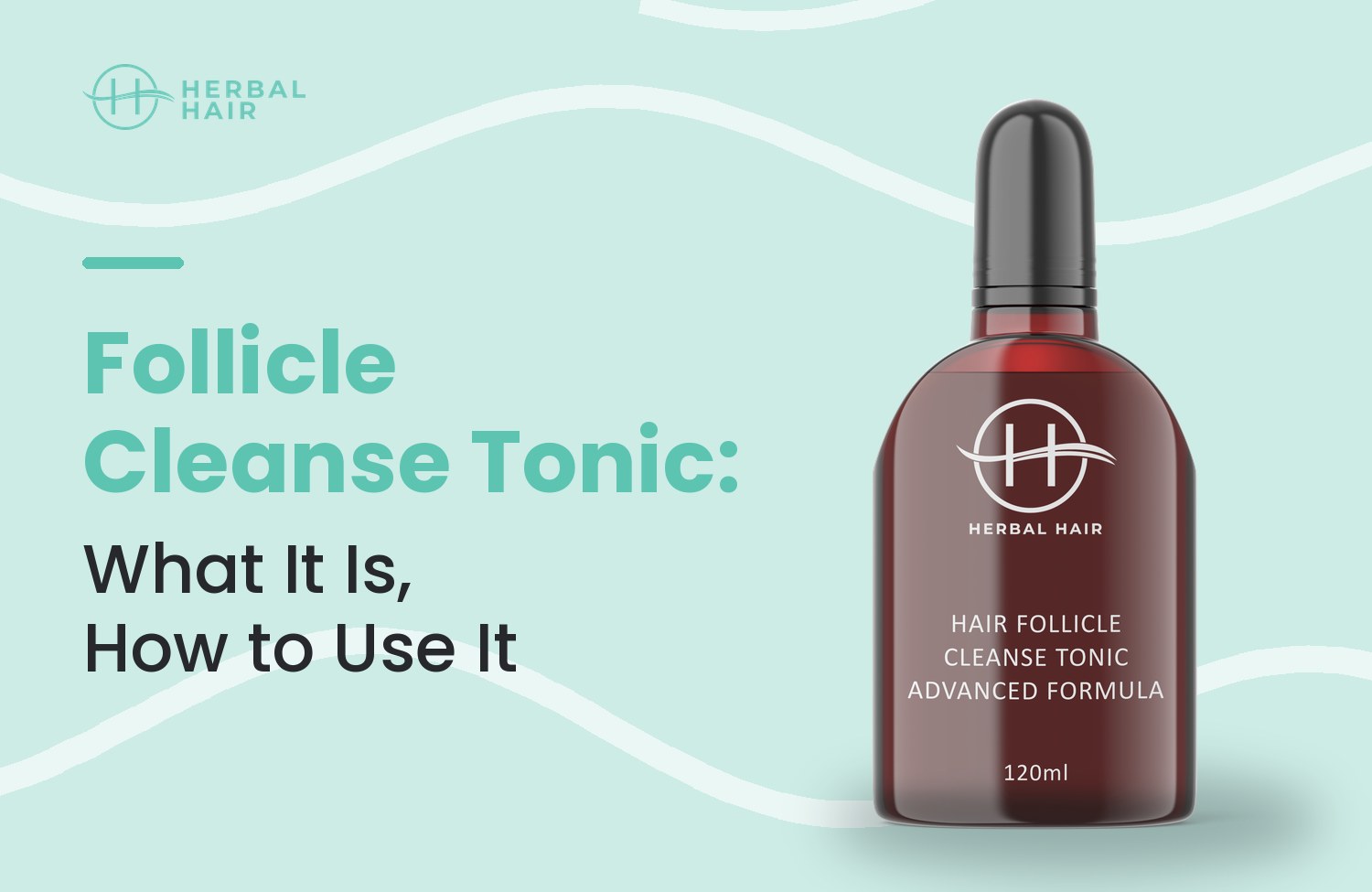
That was my exact reaction the first time one landed on my desk. Pale blue box, a sprig of purple flowers on the front, the word BOOST in a little black box. Inside, a dark red glass looking bottle with a black cap and a white H on it. It looks like something you’d find in a very expensive hotel bathroom and be slightly scared to open.
So I opened it. Here’s what it is.
A tonic, not a shampoo
Follicle Cleanse Hair Tonic is a scalp lotion. You don’t wash with it. It goes onto a clean, dry or towel dried scalp, you rub it in, and it stays there. No rinsing, no lather, no fuss.
It’s 120ml, it costs £29.99, and in the Herbal Hair range it’s the one you reach for first, before the other tonics. Think of it as the opening act. The website describes it as a herbal scalp cleanser for buildup and congestion around the follicles. In plainer words, it’s the step that deals with your scalp before you put anything else on it.
The liquid itself is thin and amber. Runny, like a light cologne rather than an oil. Pour a bit into the cap and you’ll see what I mean.
What’s in it
The agency who filmed our video called it “all seven Chinese herbs in a bottle”, which made me laugh because there are actually more than seven on the box. Here’s the list, in the order it’s printed.
Alcohol and water at the top, because something has to carry the rest. After that it gets interesting. Red sage root (Salvia miltiorrhiza on the box, danshen in the herb shops). Sophora root. Capsicum, yes, the chilli family, which is why there’s a faint warmth to it. Gentian root. Saposhnikovia root. Panax ginseng root. Cnidium fruit. Phryma, a woodland herb I’d never heard of before I started this job. Selaginella leaf. Wild chrysanthemum flower. And right at the end, salicylic acid, which is the one non plant thing in there and is the same ingredient you’ll find in a lot of scalp and skin products.
Twelve things, if you count the water. Three little badges on the back: vegan, cruelty free, natural. And one line in smaller print, external use only, which I’d take seriously given there’s alcohol and chilli in there.
What it smells and feels like
Herbal. Properly herbal, in a Chinese medicine shop sort of way. A bit medicinal, a bit peppery, with something green underneath. It’s not unpleasant at all, but nobody is going to mistake it for a hair perfume.
On the scalp it feels cool going on, because of the alcohol, and then it warms very slightly. Not hot. Not tingly in an alarming way. Just a gentle sense that something is there. A minute later it’s gone in. What’s left is a scalp that feels clean. Lighter, somehow, though I couldn’t tell you why.
Grease was my big worry. Scalp tonic, in my head, meant flat roots by lunchtime and a hat for the rest of the day. This one doesn’t do that. It dries down to nothing. My hair the next morning looked exactly like it always does.
How I use it
A capful, roughly. The cap is the measure. I don’t pour it into my palm because it runs straight through my fingers and onto the bath mat. Learnt that the hard way.
Part the hair with one hand. Tip a little of the tonic along the parting, straight onto the skin. Then move the parting over an inch or so and do it again. Keep going until you’ve worked across the top and the sides. The bits that get missed are the crown and the back, so I do those last and on purpose.
Then fingertips. Small circles, a minute or two. Not nails, because you’ll scratch, and not so hard that you’re dragging the hair about. Just enough pressure that you can feel it.
That’s it. I don’t rinse. I let it dry, which takes about a minute, and then I either leave it or follow it with the next tonic in the range.
When do I do it? After washing, mostly, on a towel dried scalp. Evenings suit me because I’m not rushing out of the door with damp hair. Every day while I’m using it, and the directions mention twice a day if things are more severe. The one thing everyone in the range agrees on is that you give it three months before you form an opinion. Three months, not a fortnight.
Where it sits in the routine
If you’re using more than one Herbal Hair product, the usual order is this. Shampoo, in the shower. Towel. Then the tonics. Cleanse Tonic first, because it’s the one that prepares the scalp. Then either the Hair Loss Prevention Tonic or the Follicle Feed Tonic, depending on which one you’ve bought.
You don’t have to do all three. Plenty of people use the shampoo and one tonic and leave it there. But if you are going to layer them, Cleanse goes on first. It says so on the website and it makes sense once you’ve used it.
A few things worth knowing
It’s a cosmetic scalp product, not a medicine, and I’m not going to tell you it does anything beyond what the box says.
It’s alcohol based, so eyes are a no. Mine found out the hard way one tired evening, and the answer was lots of cold water and a bit of swearing. Keep the cap pointed away from your face.
Not for children under three. Store it somewhere cool and dry with the cap on properly, because an open bottle of anything alcohol based will slowly evaporate on you.
The bottle doesn’t have a dropper or a nozzle. It’s a plain screw top, you pour. Messy? A bit, the first time. Now I just fill the cap and go from there.
One more thing. The smell goes from your scalp in minutes but it hangs about on your fingers for ages. Wash your hands after, or the next cup of tea you make will taste faintly of ginseng. Ask me how I know.
So, any good?
I’ll be honest, I expected not to like it. I expected sticky, I got clean. I expected a strong smell that hung about, I got a faint herbal note that was gone by the time I’d made a cup of tea. The parting and capful method takes about three minutes once you’ve done it a few times, which is less time than I spend looking for my keys.
If you’ve been curious about the Herbal Hair tonics and didn’t know which one to start with, start with this one. It’s the first step for a reason.
Herbal Hair sell it, 120ml a bottle. Ingredients and directions are on the box, the caution notes are on the back of the bottle, and it’s worth two minutes reading both before the cap comes off.